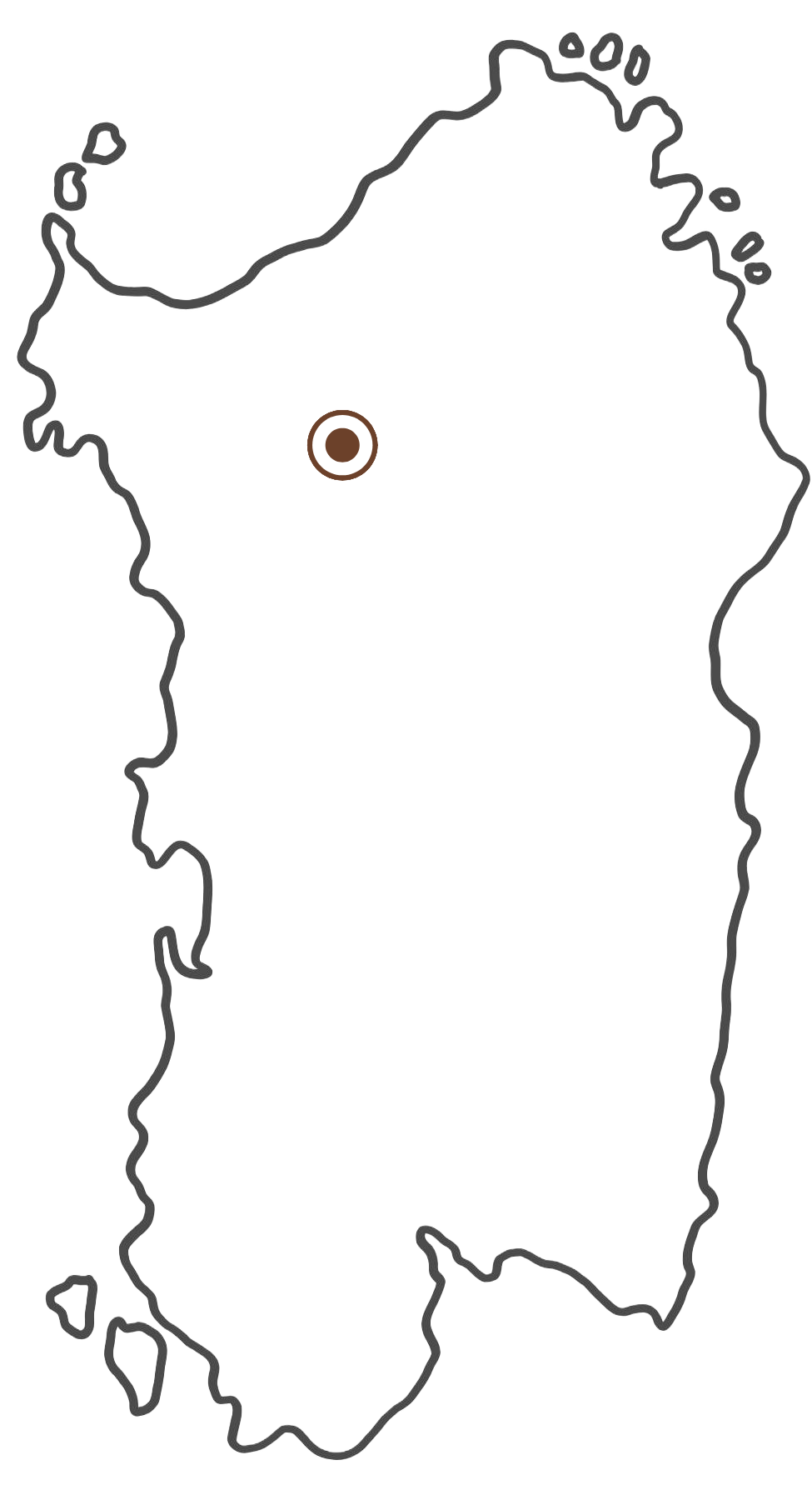
In Mores, Sa Coveccada is a demonstration of pure strength, an open challenge to gravity and time hurled nearly four thousand years ago.
To speak of a dolmen here risks being reductive. This is not a simple burial site, but a megalithic machine of thirty tons of pink trachyte that seems to have been dropped from above by a civilization of titans. The capstone, a single immense block nearly a meter thick, floats suspended on three vertical walls worked with incredible attention to detail. On the front stone, the ground-level entrance is not a passageway for living men, but a millimetric slot carved into the rock, conceived as an unsurpassable diaphragm between the outside and the inside.
The visual power of Sa Coveccada lies in this violent contrast: on one hand, the incredible brutality of the weight, and on the other, the almost surgical precision of the joints. Without the aid of mortars or wedges, the blocks have touched and supported each other for millennia purely through the calculation of thrusts. Even before the nuraghes were born, the communities of the territory had already demonstrated that they knew how to tame stone on a monumental scale, leaving an indelible imprint in the heart of the Mores plain that continues to petrify anyone who stands before it.