


A Journey Through Sardinia’s Caves
In the heart of one of Europe’s most remarkable cave landscapes
Overview
Limestone walls sculpted by water over millions of years, underground lakes hidden in darkness, secret canyons and vast cave systems stretching deep into the heart of the rock. The itinerary dedicated to Sardinia’s caves leads travellers through one of the most important and spectacular speleological heritages in Europe.
The journey begins on the north-western coast, in the Nurra region, with the famous Neptune’s Cave and the striking Green Cave, two natural wonders overlooking the sea of Alghero, where stalactites, immense chambers and dramatic light reflections create some of the island’s most iconic underground landscapes.
From here, the route continues south into the Sulcis Iglesiente area, one of the most significant speleological regions in Sardinia. At Su Mannau, visitors descend into an underground world carved by ancient waterways, while the extraordinary Santa Barbara Cave, discovered inside a mine, preserves one of Europe’s most fascinating crystal formations. Nearby, the Cave of San Giovanni impresses with its monumental natural tunnel — the only drive-through cave in Italy and one of the very few in the world — while the Cave of Is Zuddas reveals spectacular chambers filled with unusual rock formations and delicate concretions.
The itinerary then moves toward Ogliastra and the monumental Su Marmuri Cave, one of the largest caves on the island, renowned for its gigantic chambers and walls shaped by time itself.
Along the eastern coast, in the Gulf of Orosei, the journey reaches the legendary Bue Marino Caves, overlooking one of the most spectacular stretches of sea in the Mediterranean. Further inland, the cave of Ispinigoli showcases one of the tallest stalagmite columns in Europe.
The journey concludes in the heart of Barbagia with the majestic Su Bentu Cave and the nearby Sa Ohe Cave, located within the Lanaitho Valley, home to one of Sardinia’s most important karst systems and symbol of a landscape where nature still dominates with untamed force.
An itinerary that explores the island’s most mysterious and primordial side, through underground silence, water-carved chambers and landscapes that seem to belong to another world.
A Journey Through Sardinia’s Caves
🕒 6 Days
🏰 10 Caves
Follow the route in any order you like
Pick the stops that inspire you most
Book at your own pace
1000 €
Indicative price per person. Prices may vary depending on the season, selected accommodations, and included services.
- DAY 1
- DAY 2 - MORNING
- DAY 2 - AFTERNOON
- DAY 3 - MORNING
- DAY 3 - AFTERNOON
- DAY 4 - MORNING
- DAY 4 - AFTERNOON
- DAY 5 - MORNING
- DAY 5 - AFTERNOON
- DAY 6
Grotta Verde - Alghero
Admission
Ticket
Duration
1 hour
Tour Difficulty
Medium
📖 The Context
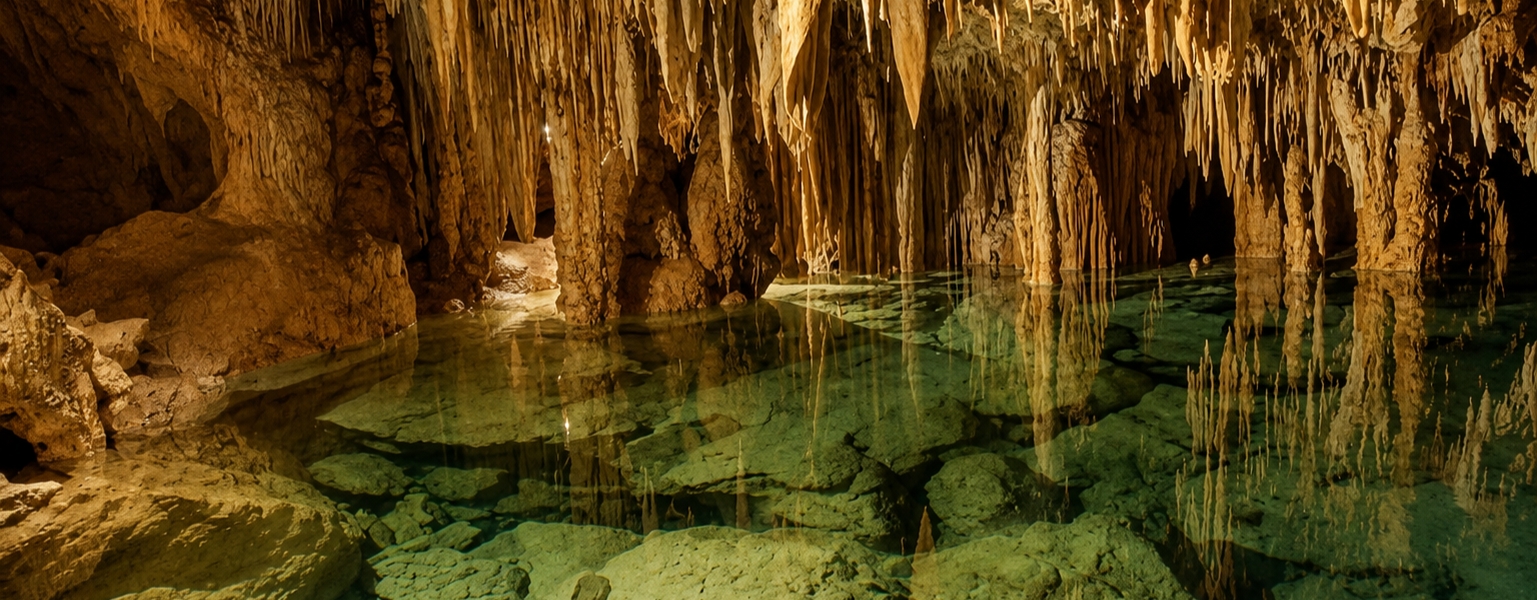
Overlooking the towering cliffs of Capo Caccia, in the heart of Porto Conte Regional Park, Green Cave is one of the most fascinating caverns along Sardinia’s northwestern coast. Less famous than the nearby Neptune’s cave, it preserves a more intimate and untamed atmosphere, where the silence of the rock and the proximity of the sea create an exceptionally evocative setting.
The cave takes its name from the greenish reflections that appear on parts of the walls, created by the light filtering in from outside and the presence of water.
Located within the protected natural area of Capo Caccia, it stands as one of the most significant examples of the karst heritage surrounding Alghero.
🪨 The Cave
Green Cave extends through chambers shaped by water over thousands of years, featuring rocky halls, limestone formations, and cavities that still retain a remarkably natural appearance. Archaeological remains linked to prehistoric human presence have also been discovered inside the cave, making this place important not only from a geological perspective, but also from a historical one.
The route allows visitors to closely observe the forms created by karst activity and to fully appreciate the immense natural forces that slowly shaped this stretch of coastline.
☀️ When to Visit
The ideal period to visit is from spring to early autumn, when weather conditions make it easier to reach Capo Caccia and fully enjoy the surrounding landscape.
Morning hours offer more pleasant temperatures and perfect lighting to admire the headland and the sea surrounding the cave. On clear days, the panorama over the Alghero coastline is particularly spectacular.
👟 Practical Tips
Comfortable shoes with good grip are recommended, especially in the more humid or slippery sections of the cave.
Bring a light sweatshirt even during summer, as temperatures inside the cave remain cool throughout most of the year.
If possible, take time to explore the Capo Caccia headland and Porto Conte Regional Park as well, one of the most spectacular natural settings in northwestern Sardinia.
Grotta di Nettuno - Alghero
Admission
Ticket
Duration
1 hour
Tour Difficulty
Medium
📖 The Context
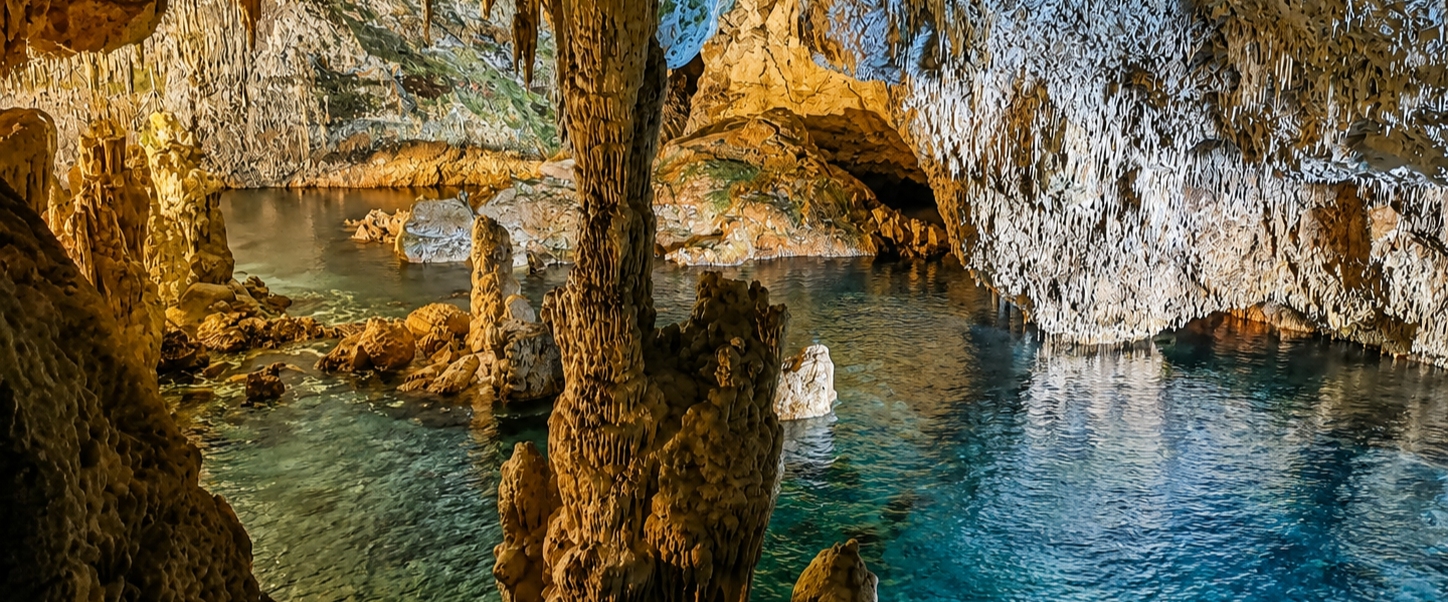
Carved into the spectacular cliffs of Capo Caccia, Neptune’s Cave is one of Sardinia’s most famous natural wonders and one of the most important karst complexes in the Mediterranean. Located near Alghero, within the Porto Conte Regional Park, this sea-facing cave offers one of the island’s most breathtaking underground landscapes, featuring saltwater lakes, enormous chambers, and limestone formations shaped over millions of years.
The cave’s setting makes it even more extraordinary. On one side lies the open sea of northwestern Sardinia, while on the other rise the dramatic vertical cliffs of Capo Caccia plunging into the water, creating one of the island’s most iconic landscapes.
🪨 The Cave
Neptune’s cave extends for several kilometers inside the headland and contains underground chambers of remarkable scale. The visitor route passes through vast halls filled with stalactites and stalagmites, eventually reaching the famous Lake Lamarmora, one of the largest underground saltwater lakes in Europe.
Each section of the cave reveals different shapes and colors, with walls sculpted by water and limestone formations that often appear almost monumental. Among the most impressive areas are the Hall of Ruins, the Reggia, and the Music Tribune, spaces where the scale of the rock formations and the silence of the underground world create a truly unique atmosphere.
The cave can be reached either by boat from the port of Alghero or via the famous Escala del Cabirol, the long panoramic staircase carved into the cliffs of Capo Caccia that leads down to the entrance while offering spectacular sea views.
☀️ When to Visit
Spring and early autumn are the best times to visit Neptune’s cave, thanks to the milder temperatures and lower visitor numbers.
Morning hours are especially recommended for those planning to take the panoramic staircase, avoiding the stronger heat of midday. If arriving by boat, it is always advisable to check sea and weather conditions in advance.
👟 Practical Tips
If you choose to descend and climb back up the Escala del Cabirol staircase, comfortable shoes and water are essential, especially during summer.
Inside the cave, temperatures remain cool throughout the year, so bringing a light sweatshirt is recommended even during the warmer months. If possible, take some time to explore the Capo Caccia headland and the scenery of Porto Conte Regional Park, one of the most spectacular areas in northwestern Sardinia.
Su Mannau - Fluminimaggiore
Admission
Ticket
Duration
1 hour
Tour Difficulty
Easy
📖 The Context
In the mountainous landscape of Sulcis Iglesiente, surrounded by forests, canyons, and scenery shaped by limestone rock, Su Mannau Cave is one of the most important underground systems in Sardinia. Located near Fluminimaggiore, this extraordinary cave extends beneath a territory rich in mining history and karst formations that, over millions of years, have created one of the island’s most fascinating subterranean environments.
The cave was already known during the Nuragic era and was used as a sacred place connected to the cult of water, adding an additional layer of fascination to an already spectacular natural setting.
🪨 The Cave
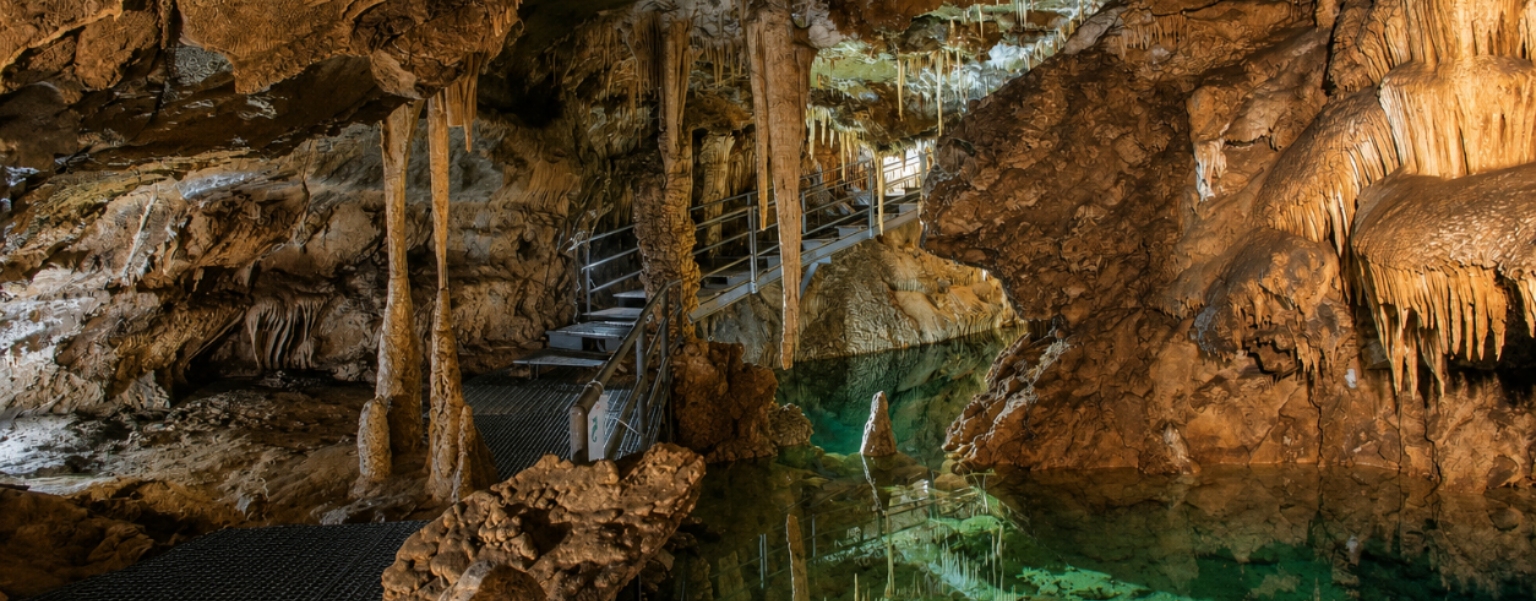
Su Mannau Cave stretches for several kilometers through an intricate system of tunnels, chambers, and underground waterways that continue to shape the rock even today. The visitor route leads through surprisingly vast environments featuring water-smoothed walls, stalactites, stalagmites, and large caverns where silence is interrupted only by the sound of water flowing beneath the earth.
One of the cave’s most captivating features is the constant presence of water, which accompanies the entire visit, creating reflections and almost surreal atmospheres. Some chambers contain spectacular formations and limestone concretions that clearly reveal the slow yet relentless force of karst activity.
The interior also preserves a very natural and immersive appearance, making Su Mannau one of the most fascinating caving experiences in Sardinia.
☀️ When to Visit
The cave can be visited during most of the year thanks to its constant internal temperature, which remains cool even in the summer months.
Spring and autumn are the ideal seasons to explore the surrounding area as well, with its mountains, forests, and historic mining sites that make Sulcis Iglesiente one of Sardinia’s most distinctive landscapes.
👟 Practical Tips
Inside Su Mannau Cave, some sections of the path can be damp, so comfortable shoes with good grip are recommended.
A light sweatshirt is useful even during summer, since the underground temperature stays cool throughout the year. If possible, combine the visit with the other natural and mining attractions around Fluminimaggiore and Sulcis Iglesiente, one of the island’s most surprising and underrated regions.
Grotta di Santa Barbara - Iglesias
Admission
Ticket
Duration
1 hour
Tour Difficulty
Easy
📖 The Context
Hidden beneath the former mining district of Sulcis Iglesiente, the Cave of Santa Barbara is considered one of the most extraordinary caverns in Sardinia and one of the most fascinating geological sites in Europe. It was discovered in 1952 during excavation works inside the San Giovanni mine, near Iglesias, when miners unexpectedly came across an underground chamber that had remained isolated for millions of years.
This incredibly long isolation allowed the cave to preserve a rare mineral ecosystem, transforming it into a place of immense scientific as well as scenic value.
🪨 The Cave
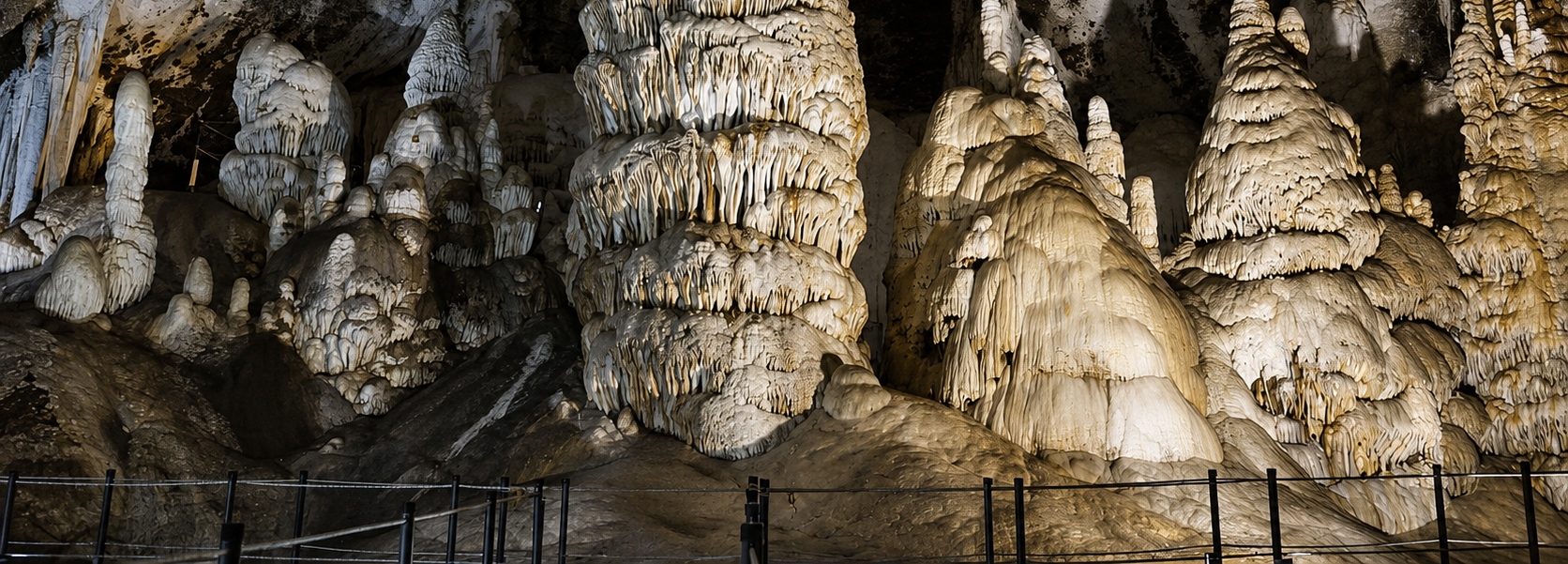
Entering the Cave of Santa Barbara feels like stepping into an almost unreal world, where enormous crystals, shimmering walls and mineral formations create an environment completely different from the classic karst caves of Sardinia.
The cave is especially renowned for its spectacular barite crystals, among the oldest known in Europe, covering walls and ceilings with bright reflections and remarkable transparency. The vast dimensions of the main chamber, combined with the absolute silence and soft lighting, create a suspended and almost surreal atmosphere.
Reaching the cave also involves passing through the historic underground galleries of the San Giovanni mine, a detail that makes the experience even more distinctive and offers direct contact with the industrial and mining history of the Sulcis Iglesiente region.
☀️ When to Visit
The Cave of Santa Barbara can be visited throughout the year thanks to its stable internal temperature.
Spring and autumn are the ideal seasons to combine the excursion with the exploration of the mining landscapes around Iglesias and the other historical and natural sites of Sulcis Iglesiente, while avoiding the hotter temperatures of summer.
👟 Practical Tips
The visit includes walking through underground mining environments, so comfortable shoes and a light sweatshirt are recommended.
Inside the cave, it is important to carefully follow the guides’ instructions, as this is an extremely delicate environment of great scientific value. If possible, also dedicate some time to exploring the historic mining areas around Iglesias, one of the most fascinating geological and industrial landscapes in Sardinia.
Grotta di San Giovanni - Domusnovas
Admission
Ticket
Duration
1 hour
Tour Difficulty
Easy
📖 The Context
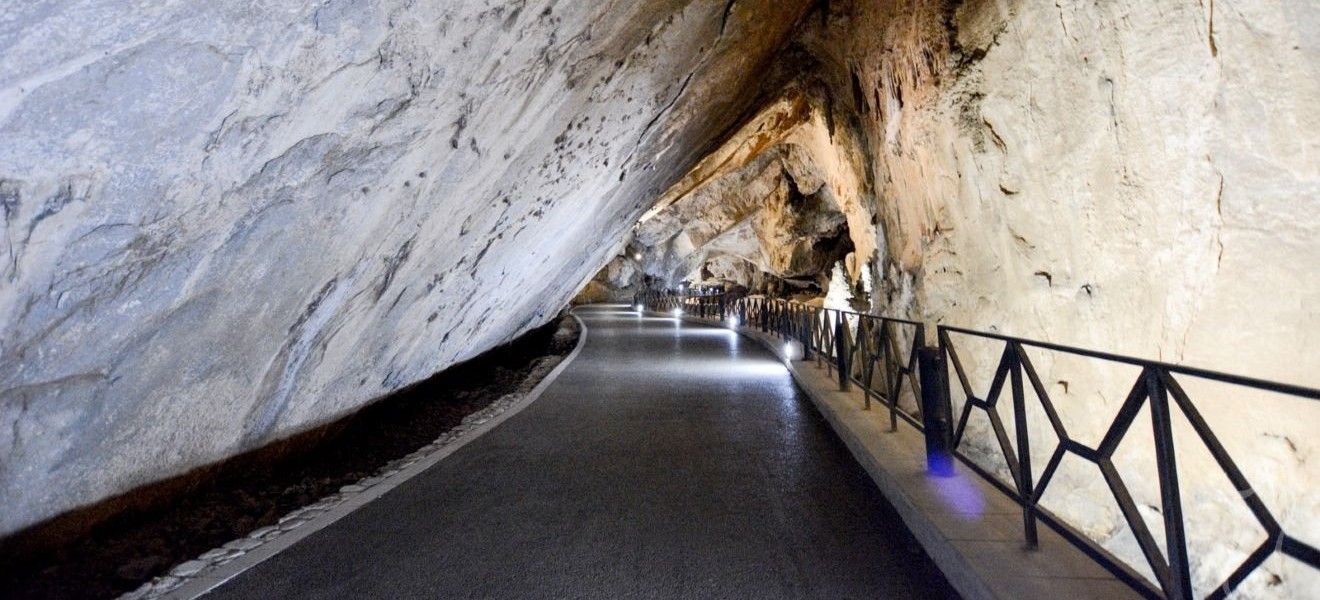
In the mountainous territory of Domusnovas, surrounded by forests, limestone cliffs and landscapes marking the gateway to the wildest part of the Sulcis Iglesiente region, the Cave of San Giovanni holds a unique place in the international speleological landscape. For many years, it was the only drive-through cave in Italy and one of the very few in the world accessible by car, a feature that made it famous far beyond the borders of Sardinia.
Today, vehicle traffic is no longer allowed and the cave can only be crossed on foot, allowing visitors to experience the site in a far more immersive and peaceful way, in close contact with the surrounding natural environment.
🪨 The Cave
Unlike traditional tourist caves filled with chambers and mineral formations, the Cave of San Giovanni appears as a huge natural tunnel carved through the mountain, approximately 850 metres long, connecting the two opposite sides of the Oridda Valley.
Its scale is striking from the very entrance: towering rock walls, vast cavities and natural light effects accompany the entire crossing, creating an environment that feels dramatically different from other Sardinian caves. In some sections, vegetation growing inside the tunnel and the daylight filtering through openings give the cave an almost cinematic atmosphere.
Walking through the cave today makes it possible to appreciate details and sensations that, during the years when cars passed through it, inevitably went unnoticed. The silence, the humidity of the rock and the monumental dimensions of the tunnel make the experience especially fascinating.
☀️ When to Visit
The Cave of San Giovanni can be visited throughout the year, but spring and autumn are the best seasons to explore the surrounding territory as well, known for its forests, canyons and some of the most beautiful nature trails in the Sulcis Iglesiente region.
Morning hours and late afternoon also provide particularly dramatic lighting inside the cave.
👟 Practical Tips
Crossing the cave is relatively easy, but comfortable shoes are still recommended, especially in the more humid sections.
Even during summer, the temperature inside remains cool, so bringing a light sweatshirt can be useful. If you have time, combine the visit with the trails of the Oridda Valley and the other natural wonders of the Domusnovas area, one of the greenest and most spectacular corners of south-western Sardinia.
Is Zuddas - Santadi
Admission
Ticket
Duration
1 hour
Tour Difficulty
Easy
📖 The Context
In the territory of Santadi, among forests, limestone hills and landscapes that define the most authentic side of the Sulcis region, the Cave of Is Zuddas preserves one of the most spectacular underground environments on the island. Discovered relatively recently compared to many other Sardinian caves, it has become famous for the extraordinary variety of mineral formations decorating its chambers and for the almost theatrical atmosphere that accompanies the entire visit.
Set within a landscape shaped by karst activity over millions of years, Is Zuddas is considered one of the most fascinating highlights of the speleological heritage of the Sulcis Iglesiente area.
🪨 The Cave
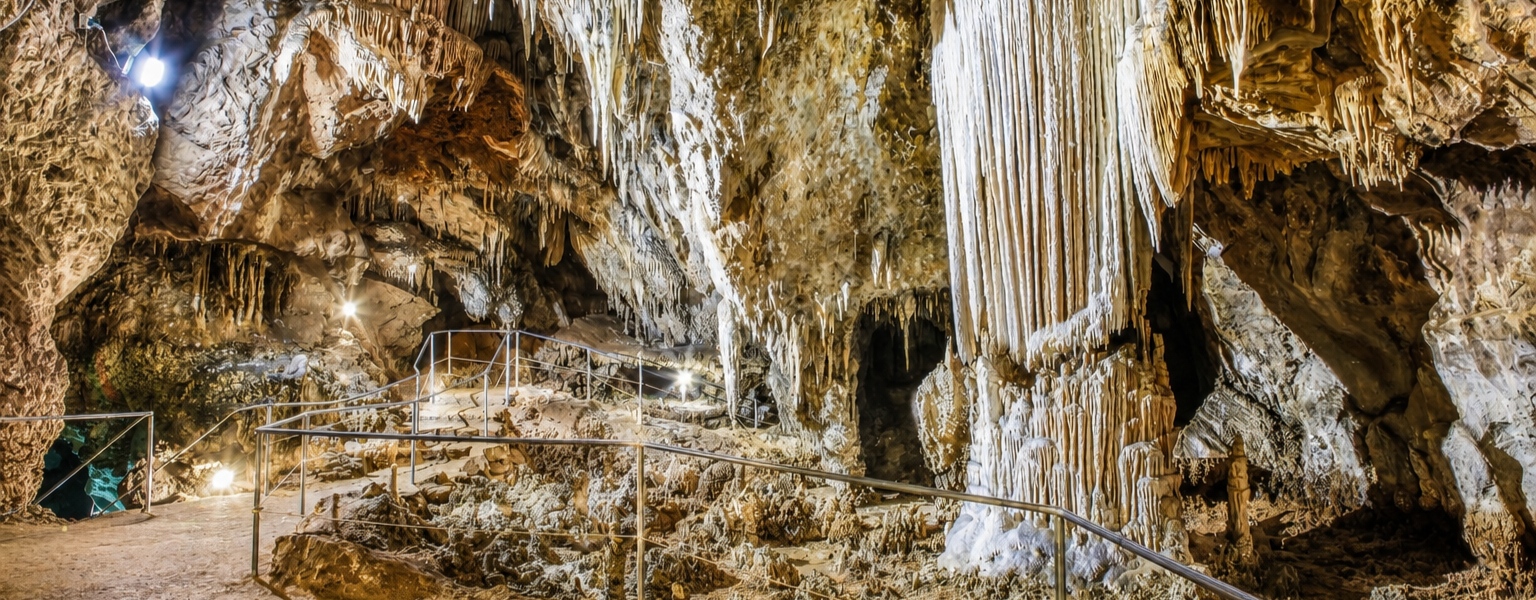
The Cave of Is Zuddas unfolds through chambers filled with stalactites, stalagmites and rock walls sculpted by water into remarkably intricate shapes. What makes the cave especially famous are its rare aragonite formations — delicate white crystals branching through the space in fragile, almost surreal structures considered among the most spectacular in Europe.
The route passes through large underground halls where carefully designed lighting enhances the colours of the rock and the complexity of the limestone formations.
Some chambers appear almost monumental, while others retain a more intimate and mysterious atmosphere, making the visit continuously varied and evocative.
The constant humidity, the silence of the cavern and the shapes carved by time combine to create an immersive experience that reveals the full power of Sardinia’s underground world.
☀️ When to Visit
The Cave of Is Zuddas can be visited throughout the year thanks to its stable and cool internal temperature.
Spring and autumn are the ideal seasons to explore the surrounding territory of Santadi and inland Sulcis as well, where forests, vineyards and rolling landscapes take on especially beautiful colours during the transitional seasons.
👟 Practical Tips
Comfortable shoes with good grip are recommended, especially because some sections of the route can be damp.
Even during the hottest months, bringing a light sweatshirt is advisable, as the temperature inside the cave remains cool. If possible, combine the visit with the exploration of the other natural and archaeological landmarks around Santadi, one of the most fascinating areas of southern Sulcis.
Su Marmuri - Ulàssai
Admission
Ticket
Duration
1 hour
Tour Difficulty
Easy
📖 The Context
In the heart of Ogliastra, among limestone cliffs, canyons and landscapes shaped by rock, Su Marmuri Cave dominates the territory of Ulassai as one of the most impressive caverns in Sardinia. Its name comes from the appearance of its interior walls, which resemble vast surfaces of polished marble, perfectly anticipating the monumental scale of the environments encountered during the visit.
Located at the foot of the spectacular cliffs surrounding Ulassai, the cave is one of the most important landmarks of Sardinia’s speleological heritage and among the largest underground environments on the island.
🪨 The Cave
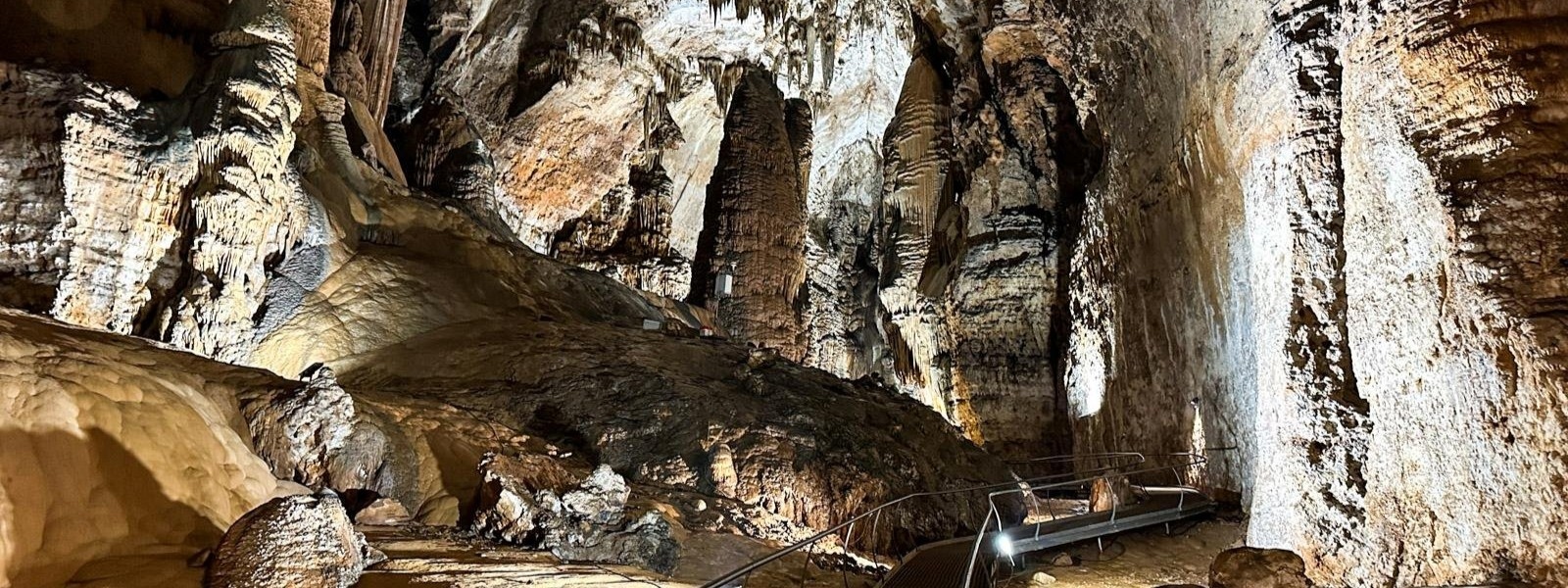
Entering Su Marmuri Cave means stepping into a gigantic underground world of immense chambers, soaring ceilings and walls sculpted by water over millions of years. The sheer scale of the cave is striking from the very beginning: some chambers reach extraordinary heights, creating the sensation of walking through a vast natural cathedral.
The route passes through constantly changing scenery, among stalactites, limestone columns and monumental mineral formations enhanced by the lighting inside the cave. In certain sections, the silence and the enormity of the spaces create an almost unreal atmosphere.
One of the most fascinating aspects of Su Marmuri is precisely this overwhelming sense of scale that accompanies the entire visit. Here, the power of karst geology reveals itself in all its grandeur, transforming the mountain into an underground landscape of astonishing dimensions.
☀️ When to Visit
The cave can be visited throughout the year thanks to its stable and cool internal temperature.
Spring and autumn are particularly recommended for exploring the surrounding territory of Ulassai as well, renowned for its canyons, panoramic trails and spectacular rock walls that define this part of Ogliastra.
👟 Practical Tips
Comfortable shoes with good grip are recommended, as some sections may be damp.
Even during the warmest months, bringing a light sweatshirt is advisable, since the temperature inside the cave remains fairly cool. If possible, take some time to explore the surroundings of Ulassai, one of the most scenic areas of eastern Sardinia, where art, nature and dramatic vertical landscapes come together.
Grotte del Bue Marino - Cala Gonone
Admission
Ticket
Duration
1 hour
Tour Difficulty
Easy
📖 The Context
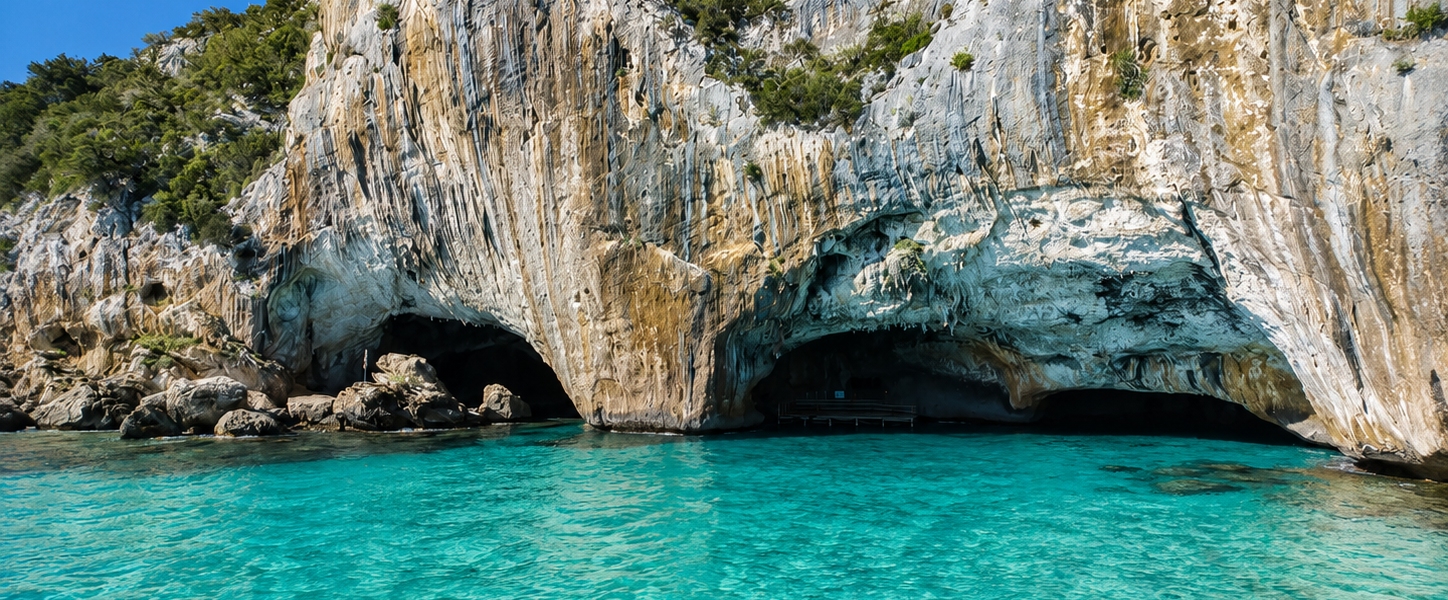
Overlooking the turquoise waters of the Gulf of Orosei, the Bue Marino Caves are among the most iconic and spectacular natural sites in eastern Sardinia.
Located along the coast of Cala Gonone, beneath the towering cliffs of the Supramonte descending dramatically into the sea, these caves owe their name to the “sea ox” — the Mediterranean monk seal, which until a few decades ago found refuge inside these caverns.
The cave system stretches for dozens of kilometres beneath the Supramonte mountains and is considered one of the most important karst systems in Italy, where sea, rock and freshwater come together to create scenery of extraordinary beauty.
🪨 The Caves
The Bue Marino Caves preserve some of the most evocative underground landscapes in the Mediterranean. The visitor route passes through vast chambers sculpted by water, underground lakes, hidden beaches and walls covered with limestone formations shaped over millions of years.
One of the most fascinating aspects of the visit is the constant relationship with water.
In some sections, the sea flows directly into the cave, creating spectacular blue reflections, while in others visitors encounter ancient underground lakes and galleries disappearing deep into the mountain.
Inside the caves there are also prehistoric rock engravings dating back to the pre-Nuragic era, evidence of the ancient connection between humans and this extraordinary environment. The contrast between the white limestone and the intense blue water makes the entire route especially dramatic and instantly recognisable.
☀️ When to Visit
Spring and early autumn are the ideal periods to visit the Bue Marino Caves, thanks to milder temperatures and lower visitor numbers.
During summer, sea conditions play an important role, as the caves are mainly reached by boat from the port of Cala Gonone. Morning excursions generally offer calmer seas and the best natural light.
👟 Practical Tips
Comfortable shoes and a light sweatshirt are recommended, as the temperature inside the caves remains cool even during the hottest months.
If possible, combine the excursion with the exploration of the beaches of the Gulf of Orosei and the landscapes of the Supramonte, one of the wildest and most spectacular regions of Sardinia. The boat journey itself is an essential part of the experience, offering breathtaking views of the island’s eastern coastline.
Ispinigoli - Dorgali
Admission
Ticket
Duration
1 hour
Tour Difficulty
Medium
📖 The Context
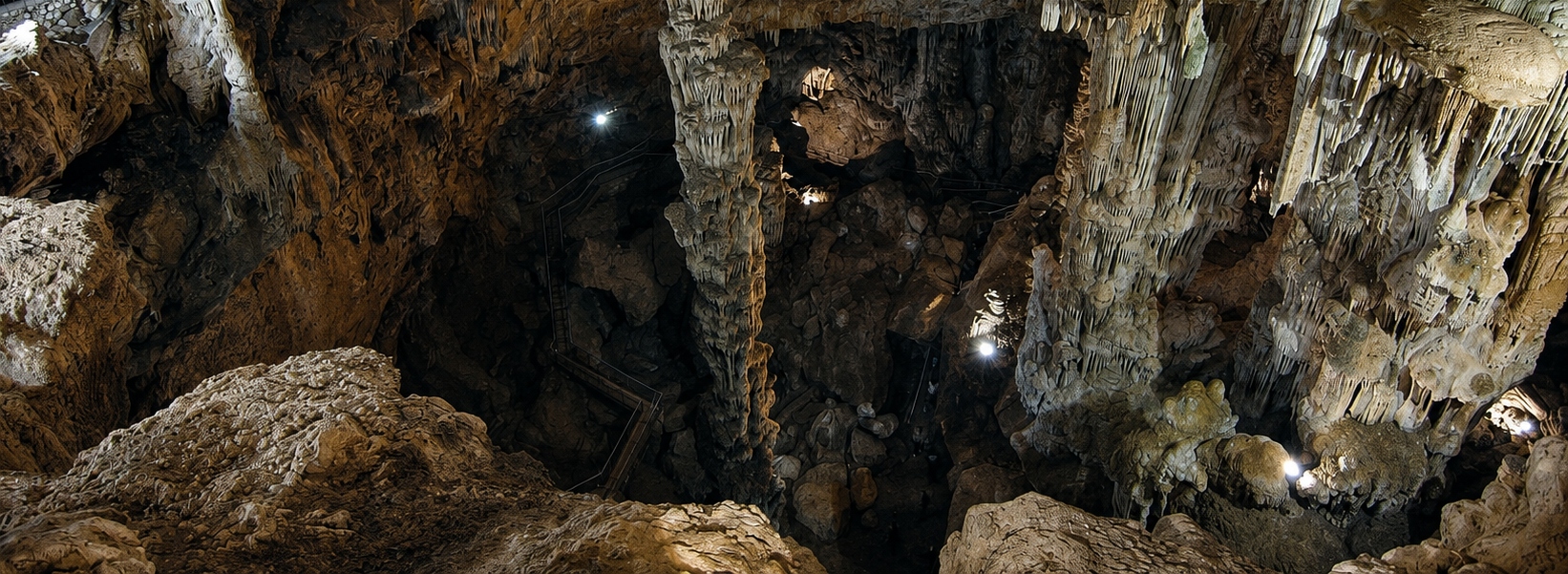
In the territory of Dorgali, among limestone plateaus, canyons and landscapes marking the transition between the Supramonte mountains and the Gulf of Orosei, the Cave of Ispinigoli preserves one of the most impressive underground environments in Sardinia. This karst cave is especially famous for the monumental scale of its main chamber and for a limestone formation considered one of the tallest in Europe.
Set within a region renowned for its geological wonders and natural cave systems, Ispinigoli is one of the most spectacular highlights of eastern Sardinia’s speleological heritage.
🪨 The Cave
The Cave of Ispinigoli immediately impresses visitors with the dramatic scale of its interior spaces. Beyond the entrance lies a vast chamber dominated by a limestone column approximately 38 metres high, formed over thousands of years by the union of a stalactite and a stalagmite. This monumental formation alone makes the cave unique within the European speleological landscape.
The cave walls clearly reveal the constant work of water, which has carved and shaped the rock into smooth surfaces, deep cavities and remarkable mineral formations with extraordinary geometries.
The interior lighting enhances the contrasts of the limestone and amplifies the sensation of standing within an immense underground cathedral.
At the base of the chamber, a deep abyss continues further into the karst system, adding an additional sense of mystery to the cave.
☀️ When to Visit
The Cave of Ispinigoli can be visited throughout the year thanks to its stable and cool internal temperature.
Spring and autumn are the ideal seasons to combine the visit with the exploration of the Dorgali area, known for its canyons, archaeological sites and spectacular landscapes stretching from the Supramonte mountains to the sea of the Gulf of Orosei.
👟 Practical Tips
Comfortable shoes with good grip are recommended for the descent into the main chamber.
The temperature inside the cave remains cool even during summer, so bringing a light sweatshirt or jacket can be useful. If possible, dedicate some extra time to exploring the surroundings of Dorgali and Cala Gonone, one of the richest areas in natural wonders along the eastern coast of Sardinia.
Su Bentu e Sa Ohe - Oliena
Admission
Ticket
Duration
1 hour
Tour Difficulty
Medium
📖 The Context
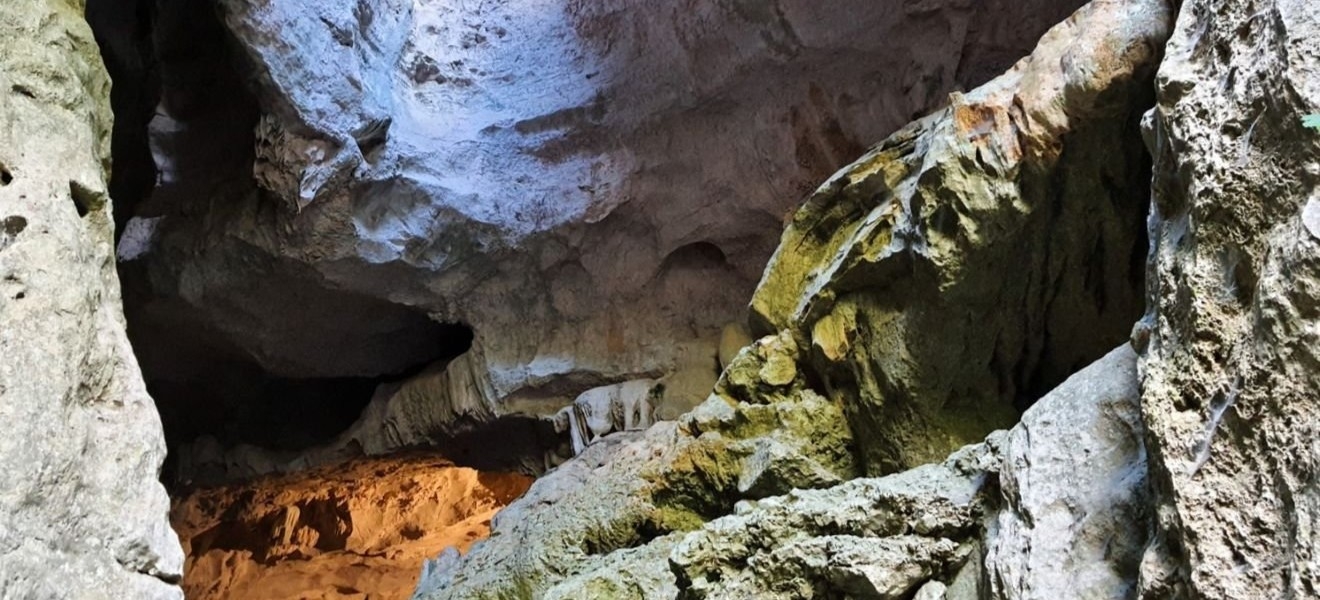
In the heart of the Lanaitho Valley, in the Barbagia region at the foot of the Supramonte of Oliena, the Su Bentu and Sa Ohe cave system represents one of the most important and spectacular karst complexes in Sardinia. These two caves, connected through an extensive underground network, stretch beneath the Supramonte mountains, crossing limestone formations, hidden waterways and environments shaped over time by the relentless force of water.
The surrounding landscape makes this place even more fascinating. The Lanaitho Valley is one of the most striking natural areas in inland Sardinia, characterised by springs, canyons, forests and towering rock walls that define one of the island’s wildest landscapes.
🪨 The Caves
The Su Bentu–Sa Ohe system extends for dozens of kilometres beneath the Supramonte and is considered one of the most important cave systems in Italy from a speleological perspective. Su Bentu Cave is especially renowned for its long galleries, siphons and underground streams that continue to shape the rock even today, creating a dynamic environment in constant evolution.
Nearby Sa Ohe Cave, connected to the same karst system, is distinguished by its large chambers and water-filled passages, where the contrast between limestone walls and the reflections of underground pools creates remarkably atmospheric scenery.
What makes these caves particularly fascinating is their strongly exploratory nature. Here, the full power of karst geology reveals itself through hidden rivers, deep siphons and underground chambers that penetrate deep into the heart of the Supramonte, making this system one of the most studied and significant in Sardinia.
☀️ When to Visit
The Lanaitho Valley can be visited throughout the year, but spring and autumn are the best seasons to enjoy milder temperatures and the spectacular colours of the Supramonte landscape.
Weather conditions play an important role, especially after heavy rainfall, as water activity inside the karst system can change significantly.
👟 Practical Tips
Many areas of the Su Bentu–Sa Ohe system are accessible only with experienced guides and specialised caving equipment, as this is one of the most complex underground systems on the island.
To explore the Lanaitho Valley and the surrounding trails, hiking shoes, water and comfortable outdoor clothing are recommended. If possible, combine your visit with the nearby Su Gologone springs and the other landscapes of the Supramonte of Oliena, one of the most spectacular and mysterious territories in Sardinia.