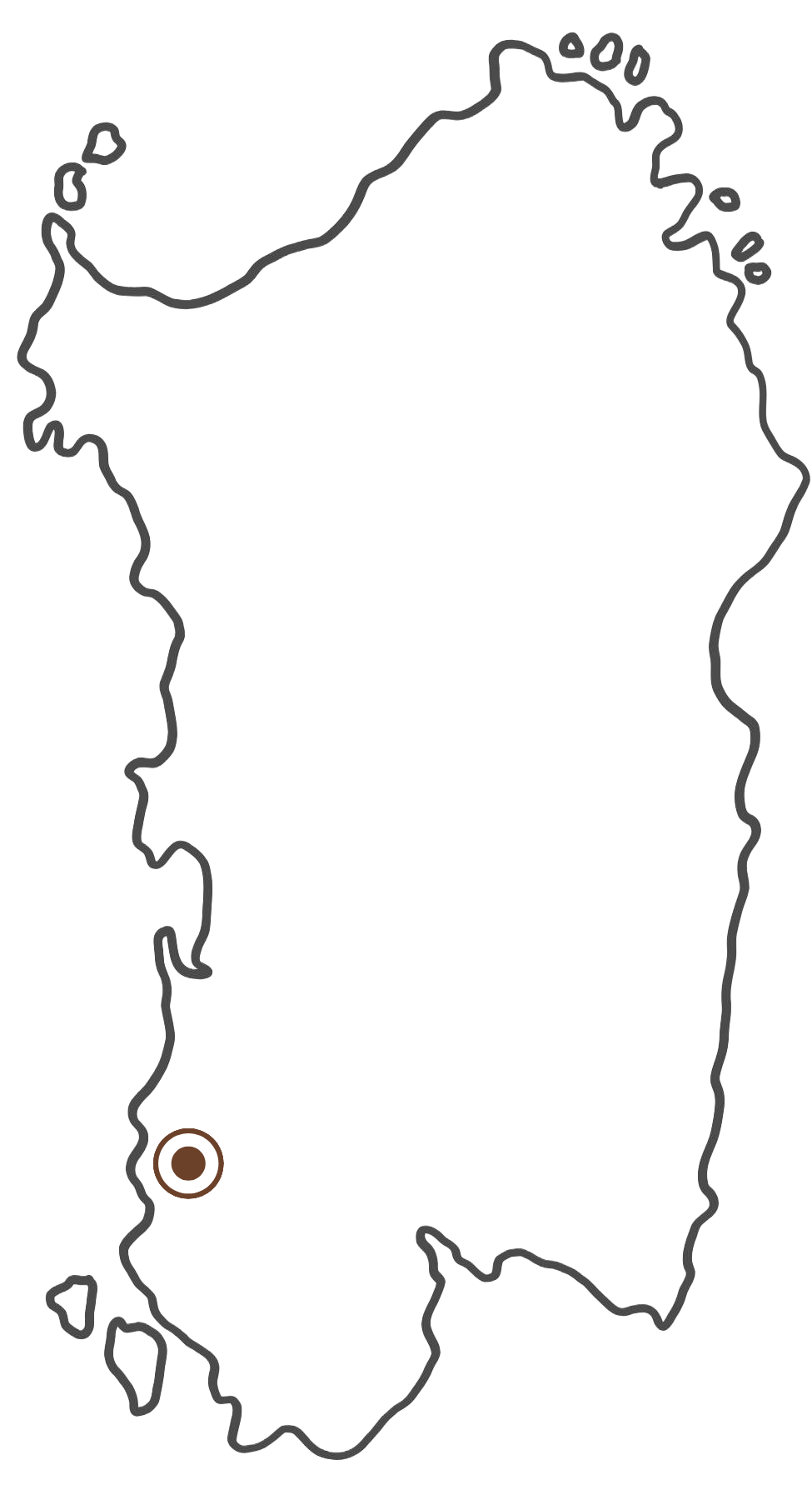
Immersed in the scenic limestone basin of Iglesiente, the Temple of Antas represents an extraordinary testimony of continuity in worship and architectural monumentality, founded within a sacred area originally frequented by Nuragic populations and subsequently reworked during the Punic and Roman eras.
The building rises in a scenic position dedicated to Sardus Pater Babai. A monumental access staircase leads to the tetrastyle pronaos, dominated by imposing columns featuring Ionic capitals. Beyond the entrance, the space is articulated into a rectangular cella leading all the way to the adyton, the most intimate sector of the sanctuary where the lustral basins intended for purification rituals are preserved. The entire structure, built with blocks of local limestone laid with extraordinary expertise, manifests the geometric rigor and elegance of imperial-era craftsmanship.
Encircled by a picturesque woodland landscape in the territory of Fluminimaggiore, the complex stands out as an archaeological unicum in which indigenous spiritual heritage harmoniously blends with the canons of grand classical architecture.