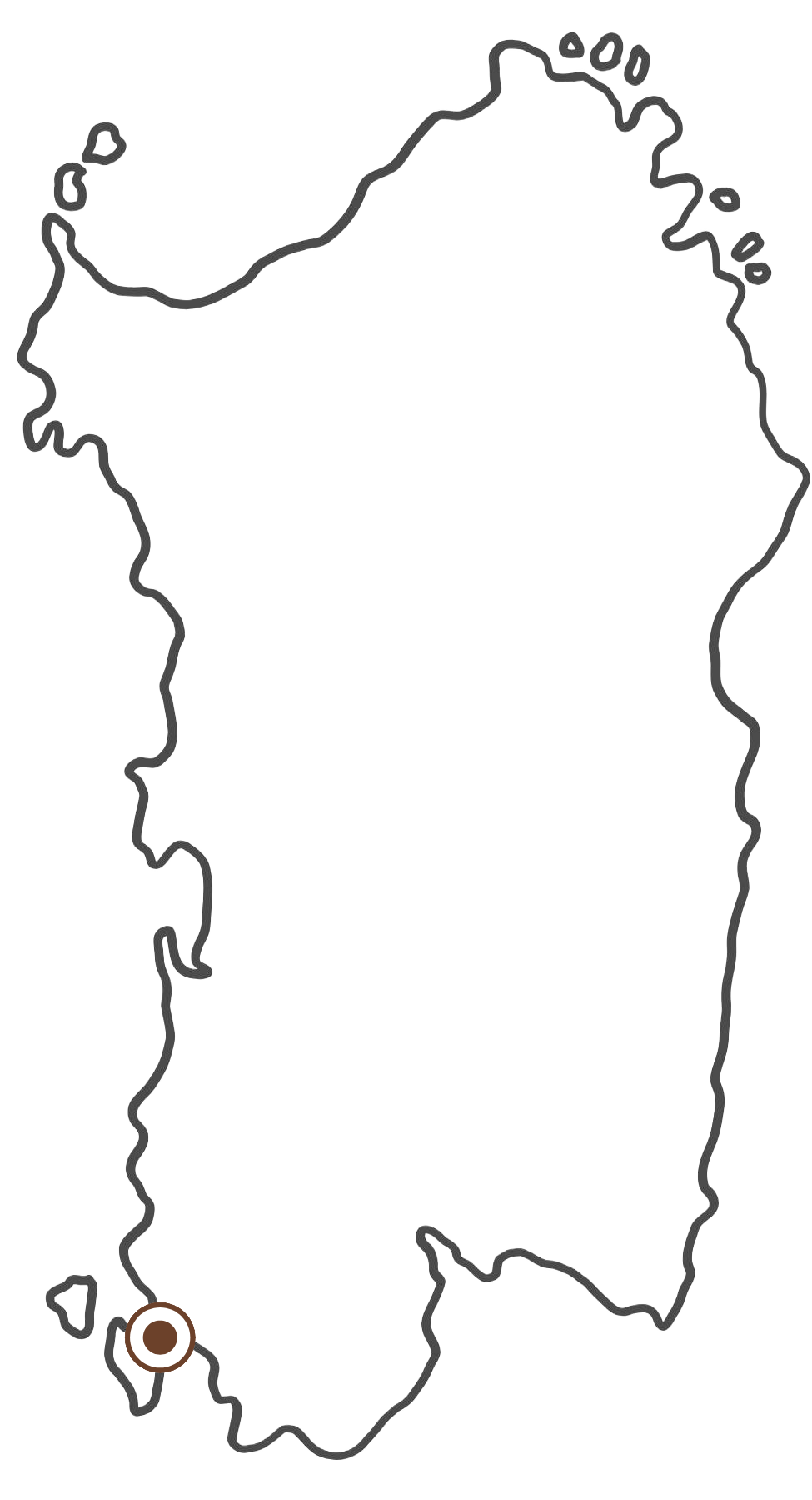
Two shapes of volcanic stone emerge powerfully from the countryside of Sant'Antioco, defying time and the quiet of the surrounding fields with the evocative names of Su Para and Sa Mongia, respectively the Friar and the Nun.
These two large vertical monoliths, silent guardians of a remote era, sink their roots into the earliest phases of the Neolithic or the Copper Age, when man began to shape the landscape with monumental signs charged with sacred and symbolic value.
Popular folklore has woven around these stones one of the island's most suggestive legends, passing down the tale of a friar and a nun who, overwhelmed by a deep and clandestine love, decided to flee together to defy the rigid rules of the time. Struck down by divine justice for having broken their vows, the two lovers were immediately petrified, and ever since, the monoliths have stood close yet motionless in the countryside, with the taller one representing the friar and the shorter one the nun, condemned to remain eternally facing one another, very close yet unable to touch.
Beyond the myth, archaeological research recognizes in these megalithic monuments fundamental reference points for protohistoric communities, likely used as territorial markers, indicators of cult sites, or ancient astronomical orientation points linked to the cycles of the earth.