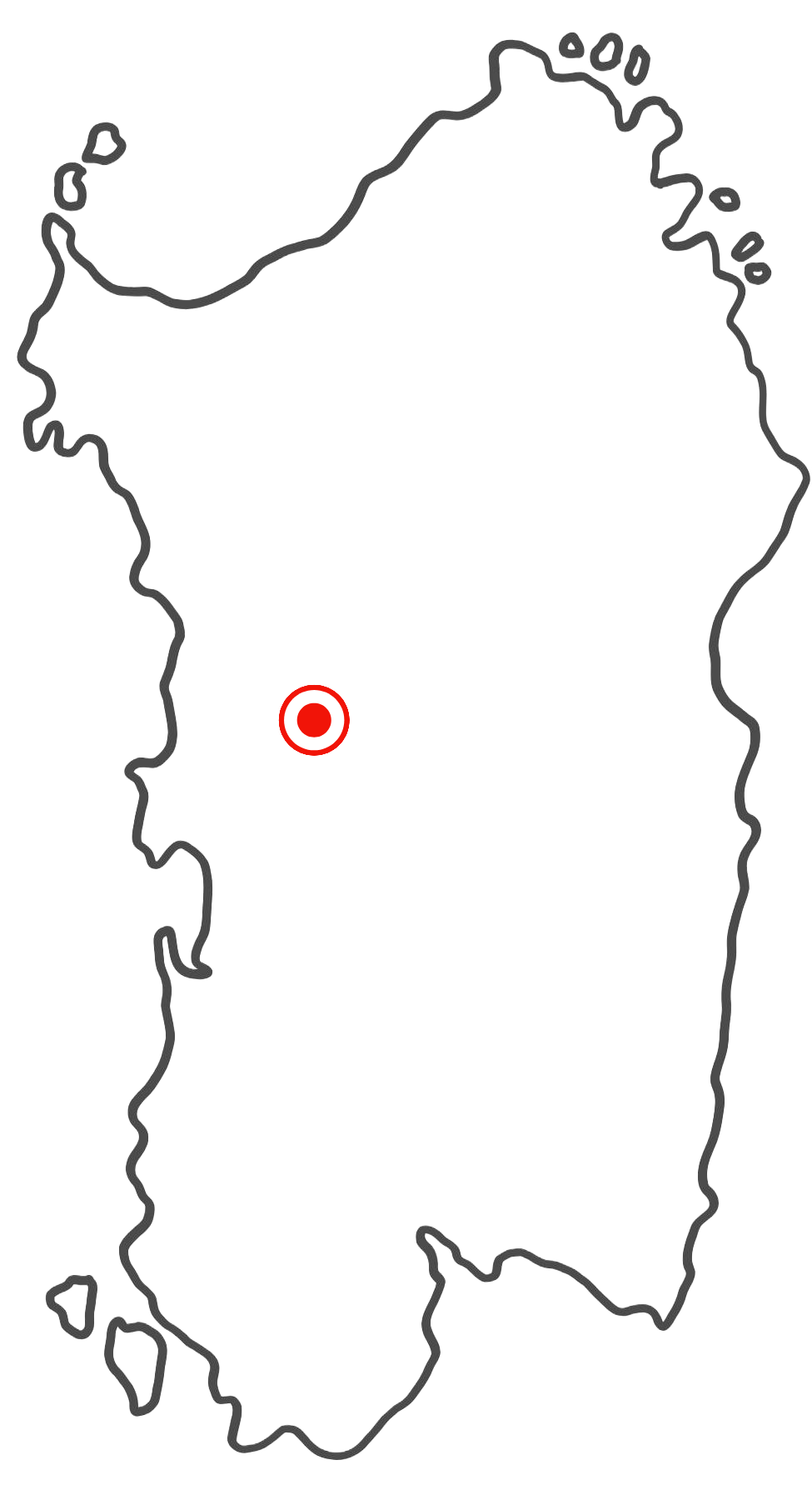
The Novenario di San Serafino is one of those places where time seems to have stood still, suspended in an atmosphere of silence and spirituality along the banks of the Tirso River, in the territory of Ghilarza.
It is a typical Sardinian rural village, built around the sanctuary dedicated to the Archangel Raphael—traditionally called San Serafino—which remains uninhabited and dormant for most of the year.
The heart of this microcosm is the 17th-century Church of San Serafino, distinguished by its simple pink trachyte facade and a covered loggia.
All around it stand Sas Cumbessias (or Muristenes), the characteristic stone cottages built to host the novenanti—the faithful who historically moved here with their families for nine days on the occasion of the religious festival. The contrast between the dark stone and the lush green of the holm oaks and olive trees sloping down toward the banks of the Tirso creates a feeling of profound tranquility.
Every year, at the beginning of October, the sanctuary village suddenly awakens from its centuries-old slumber: the Cumbessias open their doors once again, the narrow streets fill with voices, aromas, and traditional songs, and the community comes together to celebrate a devotional ritual that weaves together faith, conviviality, and a sense of belonging.
The Novenario di San Serafino is an unmissable stop for anyone wishing to discover an intimate, authentic side of central Sardinia—where the archaeology of popular devotion meets the melancholic beauty of the Tirso river landscape.