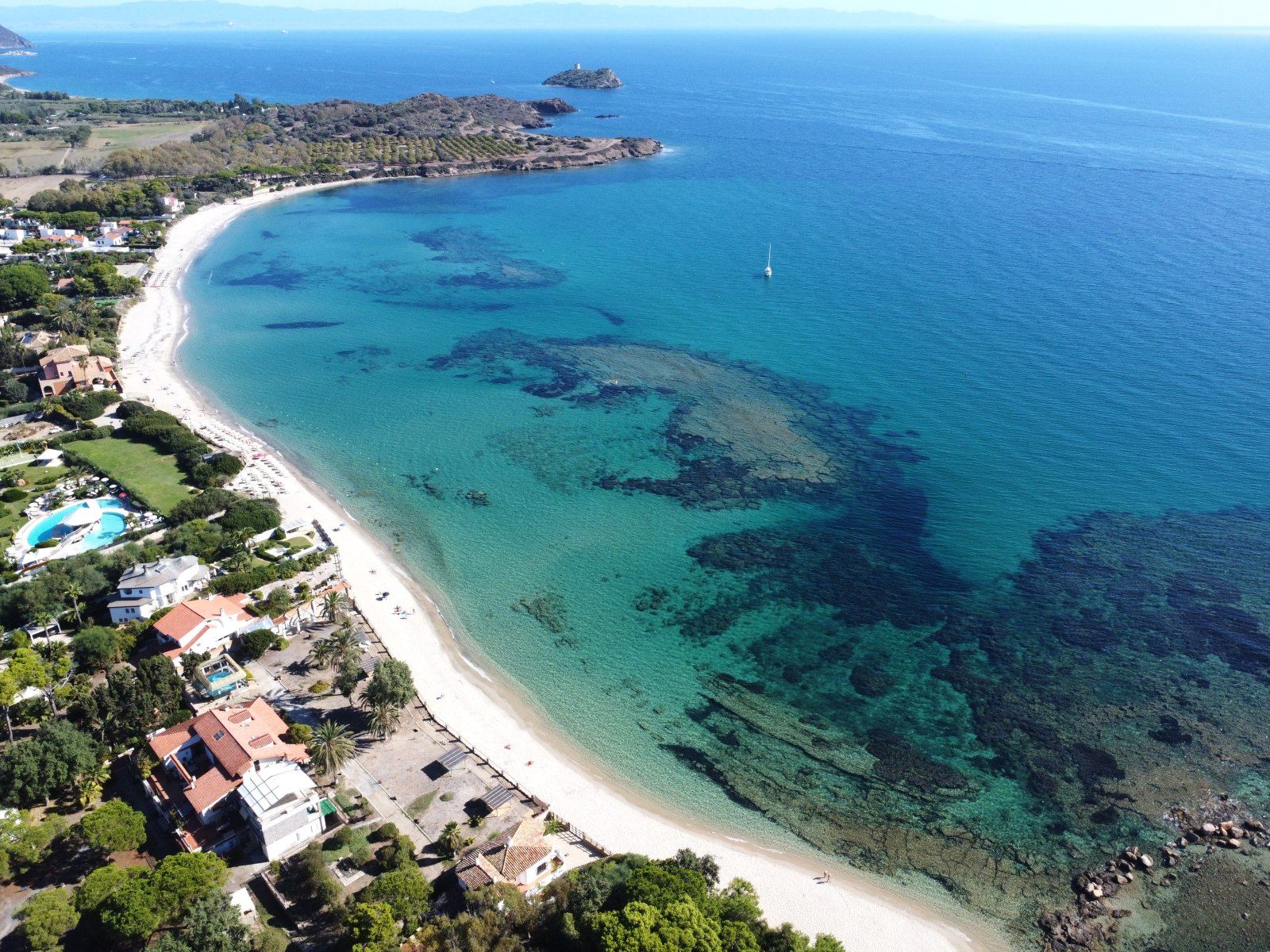
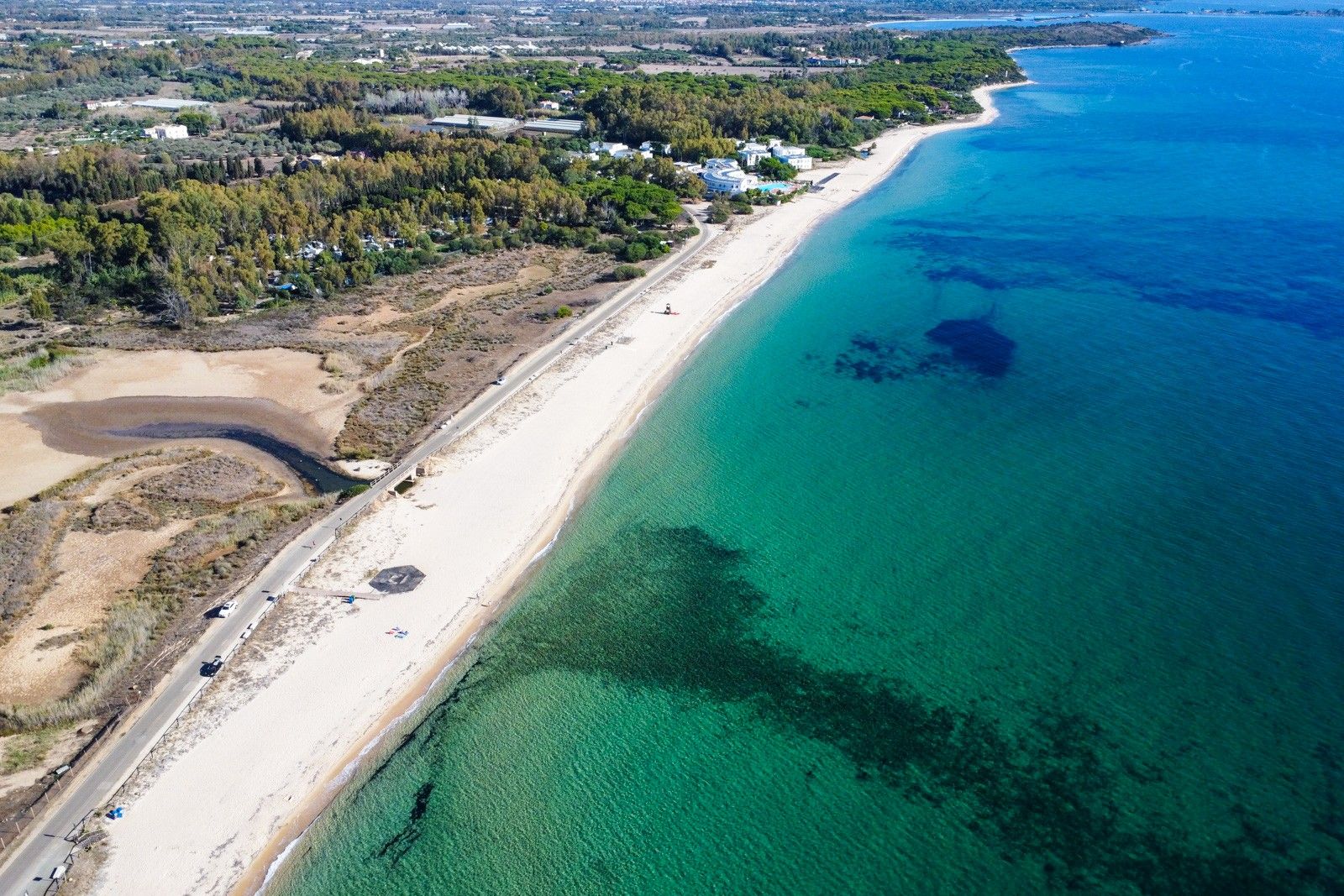
A strip of land stretching toward the Mediterranean guards the monumental vestiges of Nora, recognized as the oldest urban gem of Sardinia.
The origins of the site are rooted in the Phoenician era, grafted onto a pre-existing Nuragic settlement, and later evolved under Punic influence and subsequently in the splendor of the Roman age, when the center became a strategic port of primary importance and the terminus of the island's road network.
Among the ruins emerging along the peninsula of Capo Pula, one can distinguish the Roman theater, famous for its position overlooking the sea and for having hosted performances in the imperial age, the thermal complexes embellished with refined geometric and figurative mosaic floors, the structures of the forum, and the remains of sacred places such as the sanctuary dedicated to the Punic deity Tanit. The visit is enriched by the residential testimonies and ancient necropolises that recount the daily life, commerce, and spirituality of the small town.
Rediscovered beginning in the late nineteenth century thanks to the pioneering interventions of scholars such as Giovanni Spano, Filippo Vivanet, and Filippo Nissardi, and extensively investigated in the twentieth century with the excavation campaigns of Gennaro Pesce, the area has yielded an extraordinary quantity of artifacts. Among these stands out the famous Nora stele, a precious epigraphic artifact today kept in Cagliari that contains the first written attestation of the island's name.