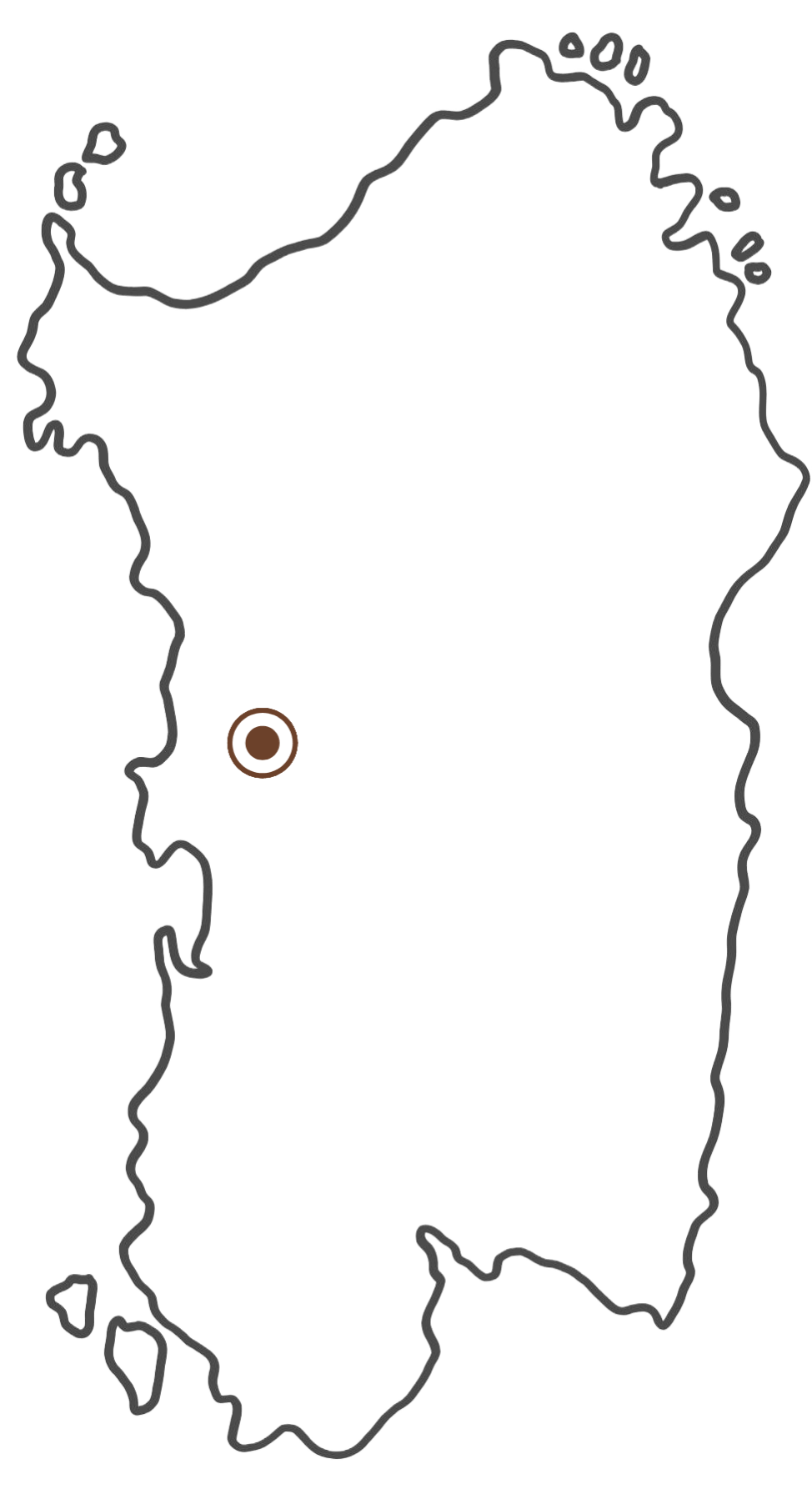
On the rugged and solitary slopes of Montiferru, where black basalt surfaces like a volcanic scar among dense oak forests and the fragrant Mediterranean maquis within the municipal territory of Seneghe, the monumental settlement of Masu Maiore imposes itself on the landscape with the enigmatic strength of a timeless fortress.
This imposing polylobed architecture does not merely represent an exceptional masterpiece of prehistoric engineering, but a true stone outpost conceived to dominate the surrounding space: the central tower, flanked by a complex and stratified system of curtain walls and perimeter bastions, surveys from above the ancient roadways connecting the internal mountain areas to the blue of the western coast.
Observing these massive megalithic walls today, built with a geometric and structural skill that has defied the wear of time for millennia, means deeply questioning the social, political, and military ferment that animated Nuragic Sardinia. Every single finely squared lava block preserves and recounts a story made of territorial strategies, advanced visual control, and an organized community capable of shaping hard rock to converse directly with infinity.
A site of extraordinary scientific and landscape relevance that jealously guards, in the eternal silence of its volcanic stone, the most hidden, authentic, and inviolate soul of ancient Montiferru.