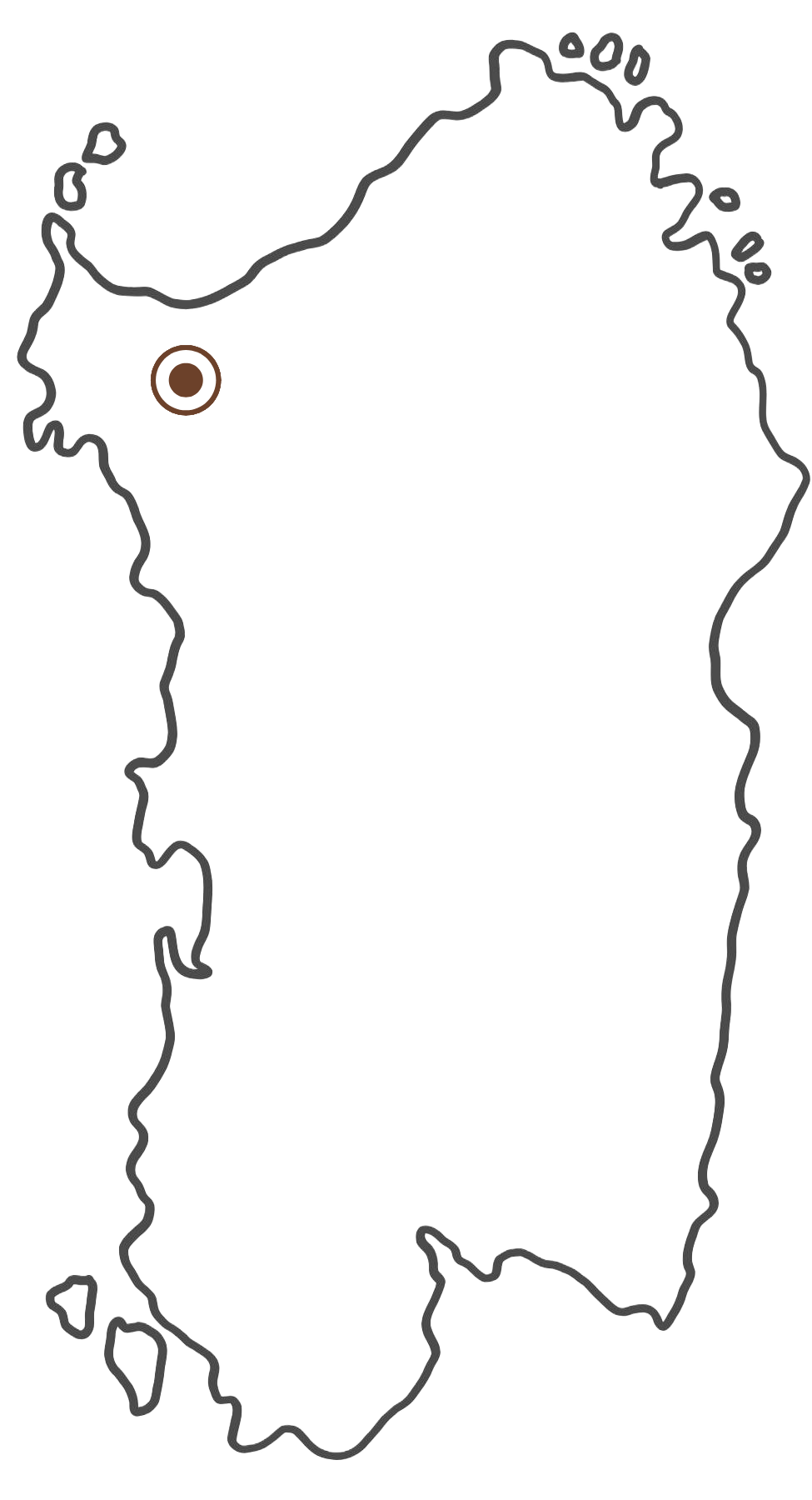
Embedded directly within the urban fabric of Uri, the Santa Caterina Nuragic Complex (also known as Santa Cadrina) offers one of the rare examples of a Sardinian settlement that flourished inside a modern populated center.
The main structure, built between the sixteenth and fourteenth centuries BC with blocks of limestone and trachyte, is articulated around an imposing keep enclosed by two smaller towers and a courtyard equipped with an ancient well.
The life of the community unfolded around the trilobe bastion and the village of huts extending along the small relief overlooking the Rio Carrabusu valley. Investigations carried out within the environments have highlighted the presence of a community hearth in the main hut, along with ovens for food preparation and metalworking, elements that testify to a distinct local domestic and artisanal organization.
The lithic and ceramic artifacts show a habitation frequency that, having surpassed the Bronze Age, continued through the Roman, Byzantine, and medieval eras, reaching right down to the present day. Now enclosed within a terraced urban park, the site of Santa Cadrina constitutes a fundamental identity symbol for Uri, documenting fully four thousand years of historical continuity in the exact same spot within the town.