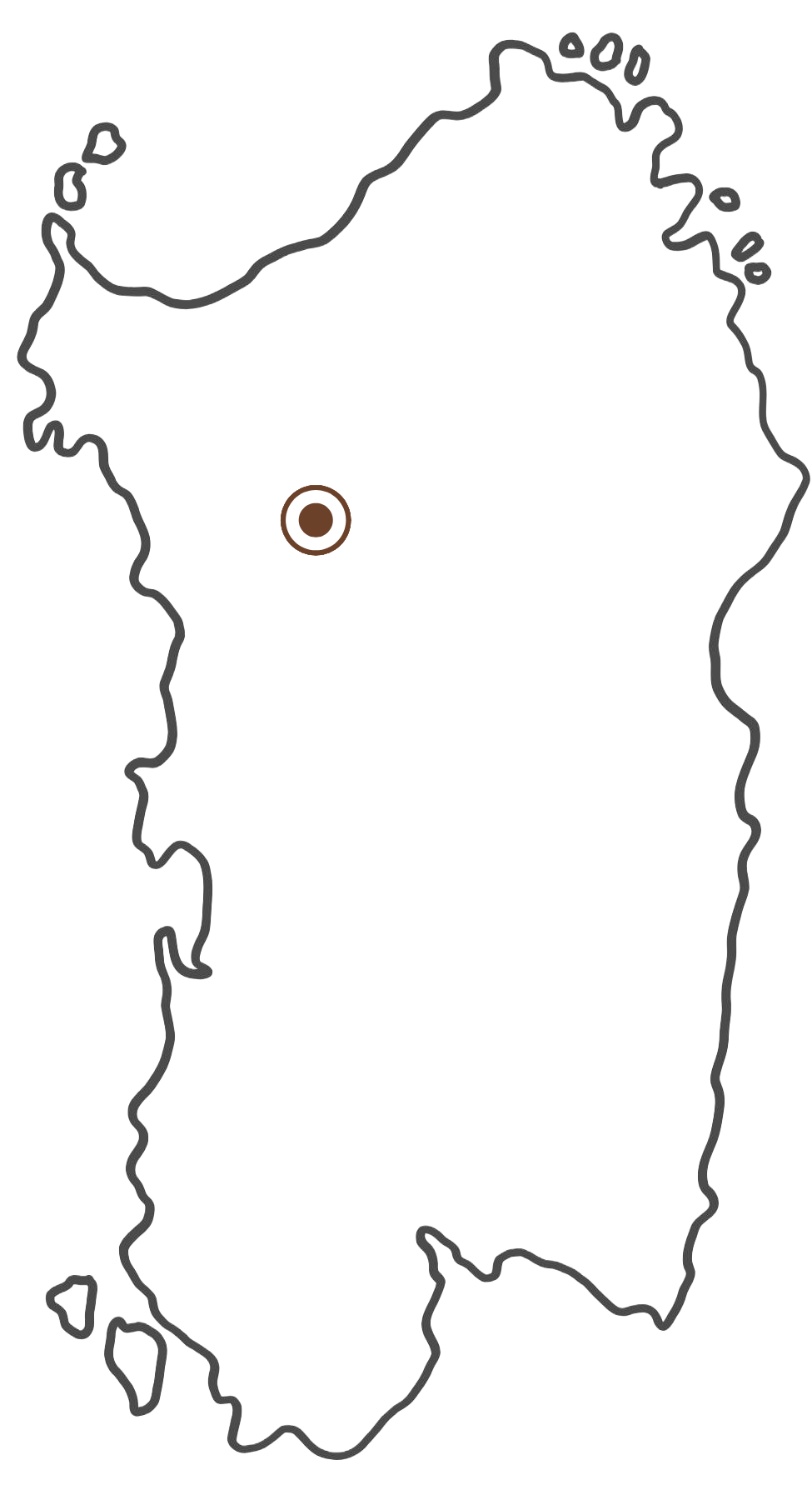
Overlooking the bay of Porto Conte, the settlement of Palmavera represents a pinnacle of protohistoric architecture in the Nurra region.
The central core, built by combining local limestone and sandstone, originated around a keep to which a second communicating tower was later added. Around the bastion developed an extensive quarter of circular huts, continuously inhabited for several centuries between the Bronze Age and the Early Iron Age.
The nerve center of public life was the Council Hut, the chosen venue for meetings of the heads of families. The circular environment encloses a perimeter stone bench, a throne reserved for the local supreme authority, and a monolithic basin. In the center of the room stood the sculpted miniature of a nuraghe, a symbolic manifesto of political sovereignty and community prestige achieved by the village elite.
The artifacts recovered during research, such as decorated pottery, copper utensils, and bronze weapons, confirm the prosperity of the inhabitants and their lively connections with Mediterranean trade routes. A disastrous fire that broke out around the eighth century BC decreed the end of the settlement, sealing beneath the collapses an invaluable testimony to the social structure of this famous site in ancient Sardinia.