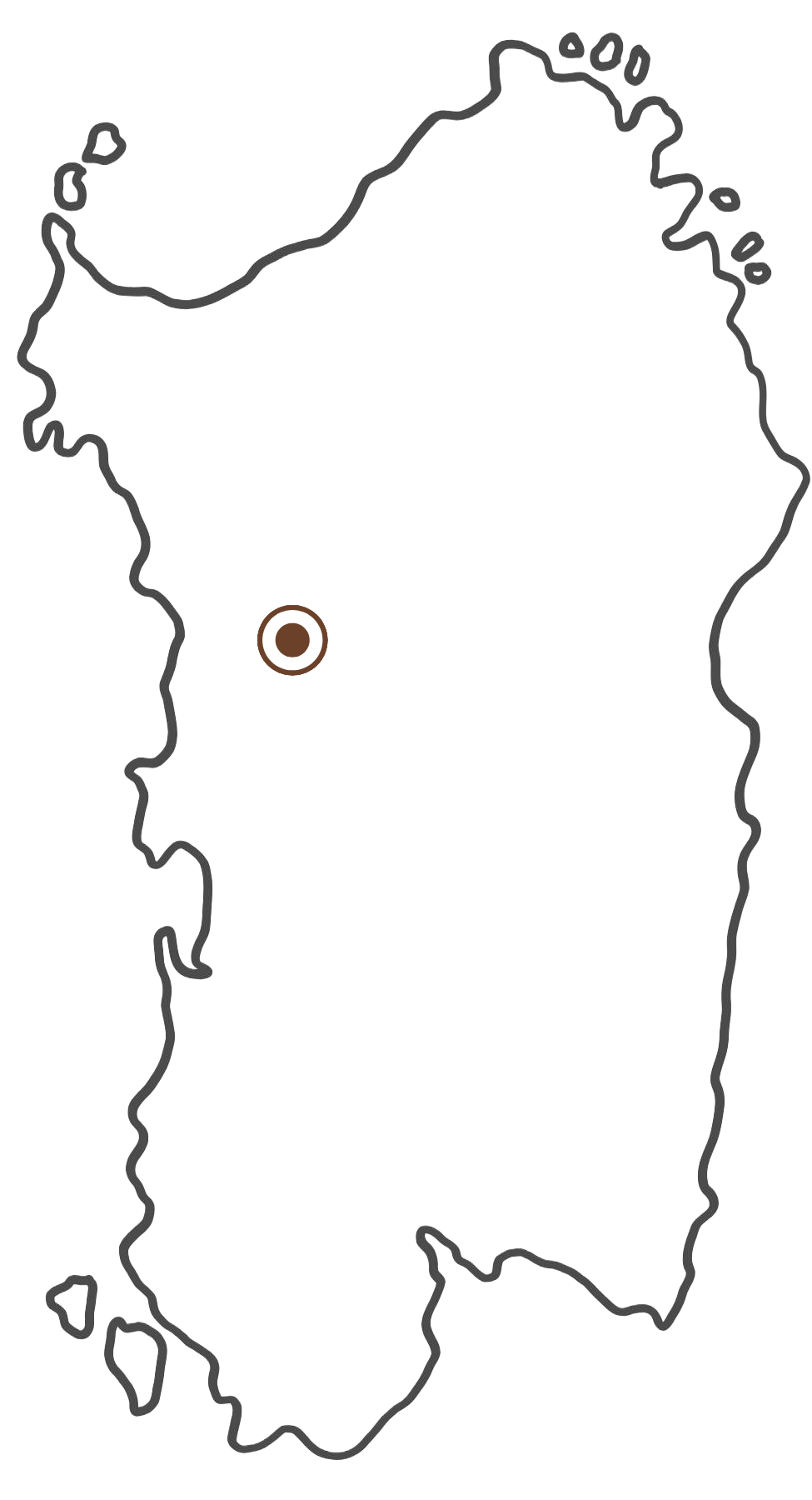
On top of a hill overlooking Macomer, the Nuraghe Ruggiu stands like a wounded giant that has defied the millennia.
The main tower, built with blocks of reddish trachyte, displays a truncation on the side facing the valley. This collapse becomes an unexpected window open to the internal architecture, offering the opportunity to read the stratification of human history superimposed on the natural one.
The trachyte ashlar blocks were laid with surprising skill, dry-fitted without the aid of binders. The exposed section reveals the power of the upper chamber, hinting at the framework of the partially collapsed tholos vault. Around this central core, the structure dissolves into heaps of stones that conceal the traces of the Nuragic village and accessory works. Nature has reclaimed its spaces, with bushes and wild thistles growing between the crevices.
The Ruggiu represents a fundamental piece for understanding the organization of prehistoric settlement in the Marghine. Its strategic position, chosen to dominate the valleys, testifies to the complex territorial control strategy planned by the communities of Sardinia during the Early Bronze Age.