Majestic, commanding, a symbol of the greatness of a civilization that once astonished the entire Mediterranean with its megalithic culture — here stands its most extraordinary and celebrated example: His Majesty, Su Nuraxi.
Blocks of dark basalt, cut and laid with astonishing precision, rise one upon another like the words of an ancient language long forgotten.
The central tower, the oldest and most imposing, dominates the whole complex, surrounded by four smaller towers linked by massive walls — an architecture that speaks of the order, skill, and vision of an extraordinary people.
Around the bastion stretched a compact and harmonious village of circular huts, where daily life moved at a slow, steady rhythm: baskets were woven, grain was ground, tools were mended, and stories were shared.
Then time flowed on, like a river that swallows everything. The voices faded, the wind took the place of words, and for centuries Su Nuraxi lay hidden beneath a veil of earth — motionless yet watchful, like a sleeping giant.
Until, in the last century, archaeologist Giovanni Lilliu awakened it from its slumber, bringing to light an entire buried world.
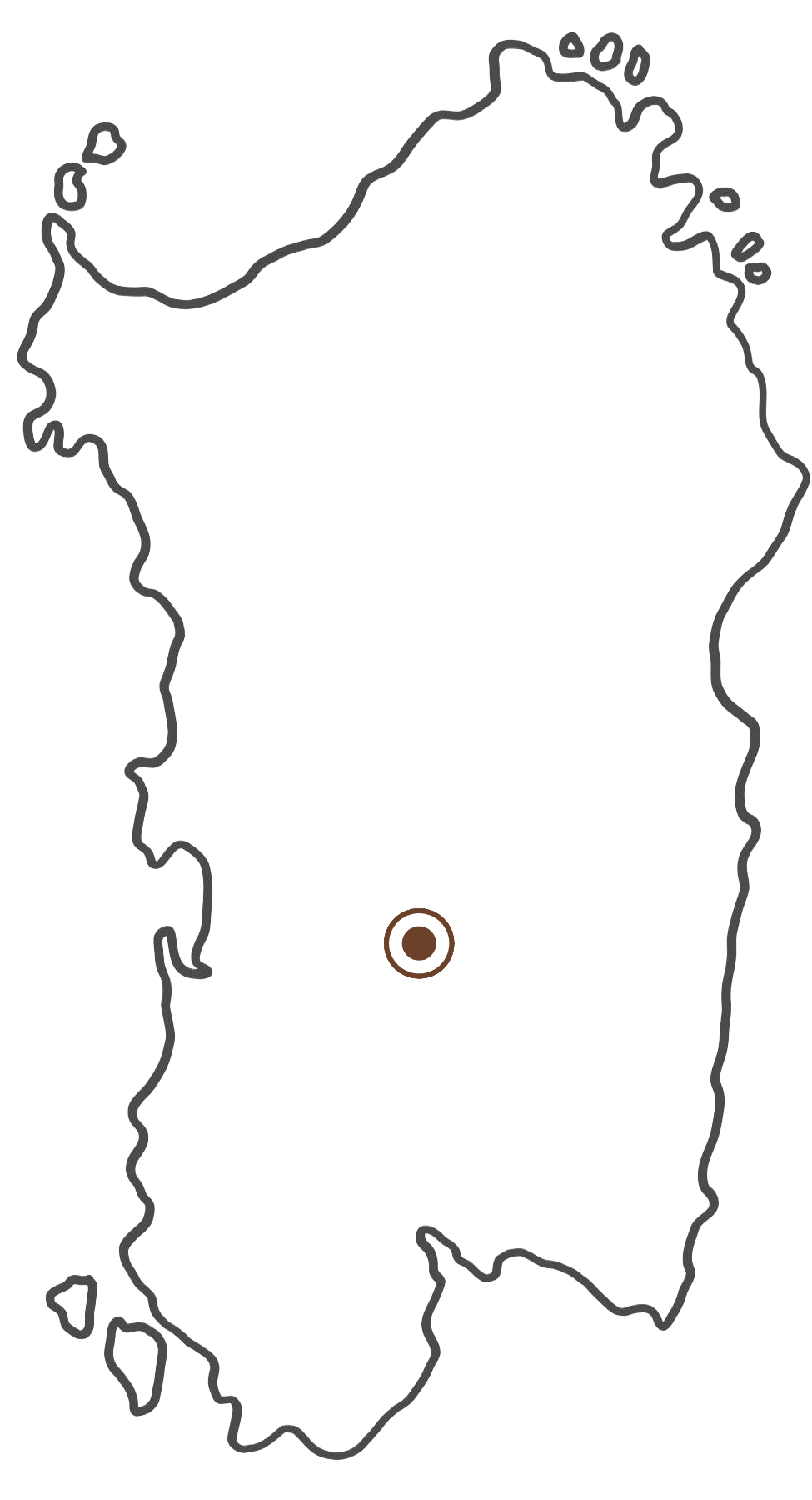
Today, this superb Nuragic architectural monument, a UNESCO World Heritage Site, still stands at the heart of the Barumini hills, surrounded by golden fields and horizons that seem endless.
Those who reach this place, guided by the breath of the wind, soon realize that it is not just a monument — it is a threshold between what once was and what still is.