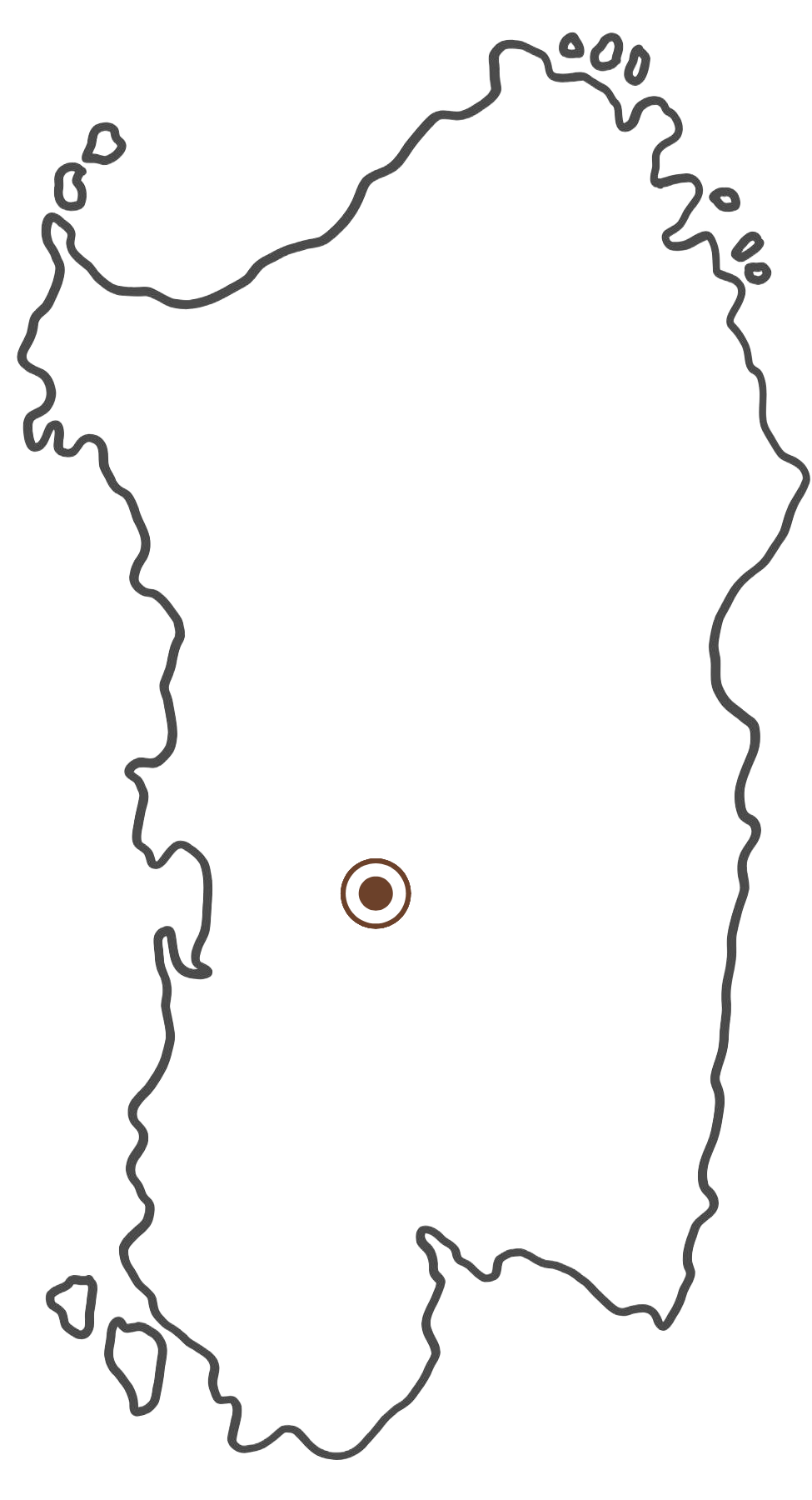
Nuraghe Caìu doesn’t speak with the thunderous voice of the grand multi-storey nuraghi.
No — it is a solitary, steadfast tower, resting on a hillside like a warrior retired from battle yet still on guard. Its stones, dark and weathered, bear the marks of time like scars of honour. Despite the wounds inflicted by millennia, it continues to command the landscape with austere dignity.
Before it, as if engaged in an endless dialogue between distant ages, lie the Domus de Janas of Genna Salixi: ancient Neolithic tombs carved into the rock, their wide and imposing entrances appearing like gateways to another world.
Here, in the countryside of Villa Sant’Antonio, history is not layered — it is seamless. The landscape flows across gentle hills and Mediterranean scrub, scented with helichrysum and mastic, pulsing with the summer chorus of cicadas and the damp caress of autumn. The open sky seems wider than usual, as if striving to embrace both the living and the ancient in a single gaze.
And so, Nuraghe Caìu and the Domus of Genna Salixi watch each other from only a few steps away — one rising toward the sky, the other carved into the earth. Two different ways of dwelling in the sacred. Sentinel and sanctuary. Fortress and womb.