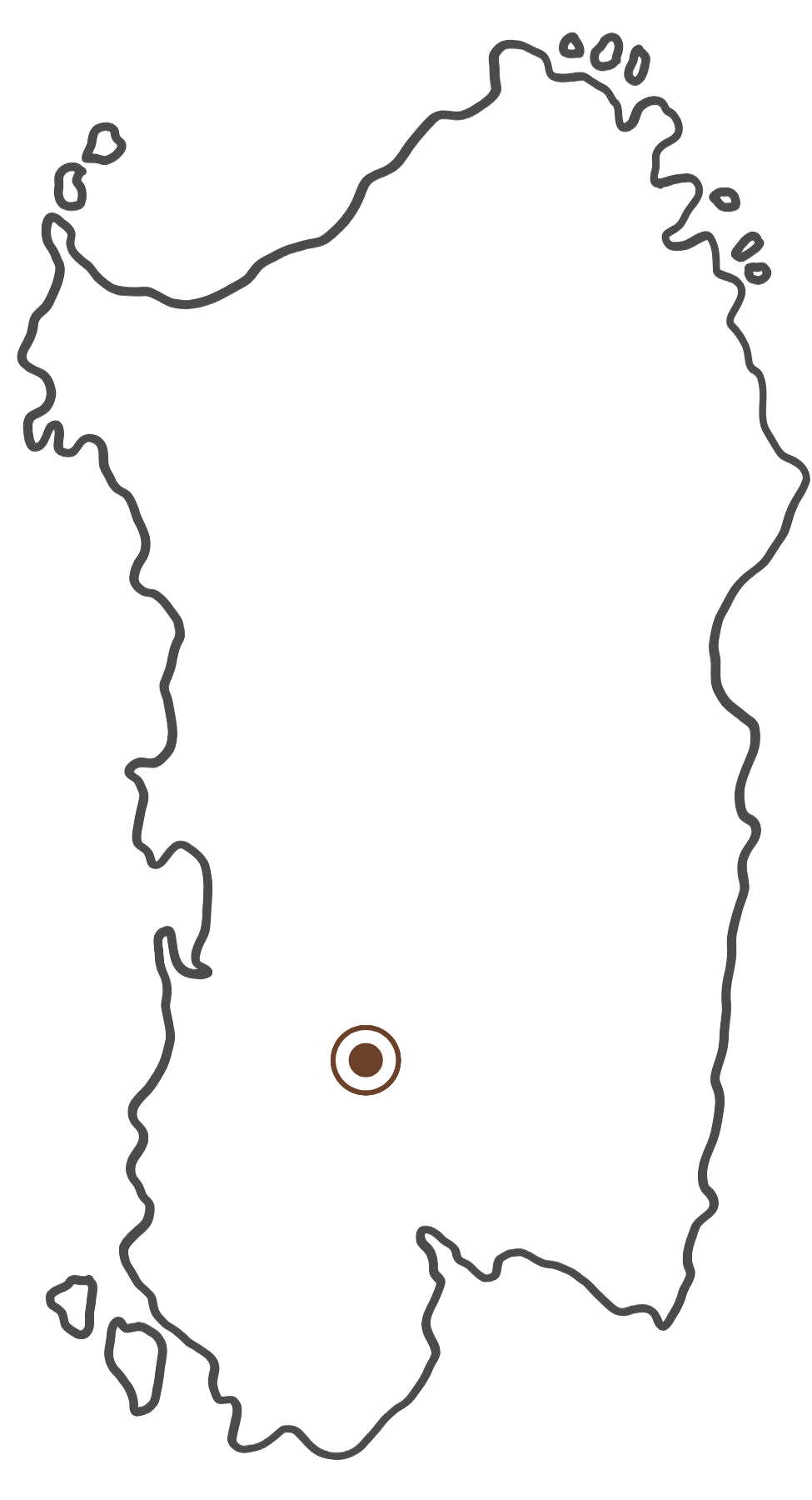
A short walk from the historic center of Sanluri, on a gentle hill overlooking the town, stands the Convent of the Capuchin Fathers, built beginning in 1608. Even before telling its story through the objects preserved within its walls, the site conveys a profound sense of contemplation and continuity through time.
The complex houses the Historical and Ethnographic Museum of the Capuchin Fathers, a treasure trove preserving items from various Capuchin convents across Sardinia, as well as collections gathered by the Friars themselves.
The museum route unfolds through illuminated choral manuscripts, friars’ psalters, and papal decrees dating from the 16th century onward. Alongside these ancient texts are relics, statues of saints, tabernacles, monstrances, and other sacred objects that recount centuries of devotion and religious life.
A significant section is dedicated to painting, featuring works from the 16th century onward, while another displays archaeological finds spanning an unexpectedly broad timeline: from the Neolithic period to the Paleochristian and Byzantine eras. It is a dialogue between spirituality and history that extends well beyond the convent’s walls.
Particularly noteworthy is the ethnographic section, which reconstructs daily life within the convent. Rooms, tools, and everyday objects restore a tangible sense of the Friars’ routine — one shaped by prayer, study, and work.
The Convent of the Capuchin Fathers in Sanluri is not merely a religious museum. It is a place where art, archaeology, tradition, and collective memory intersect — an ideal stop for those wishing to explore the spiritual and cultural history of the area within the broader context of Sardinia.